


A founder’s guide to crisis management | Uri Levine (Waze co-founder, serial entrepreneur)
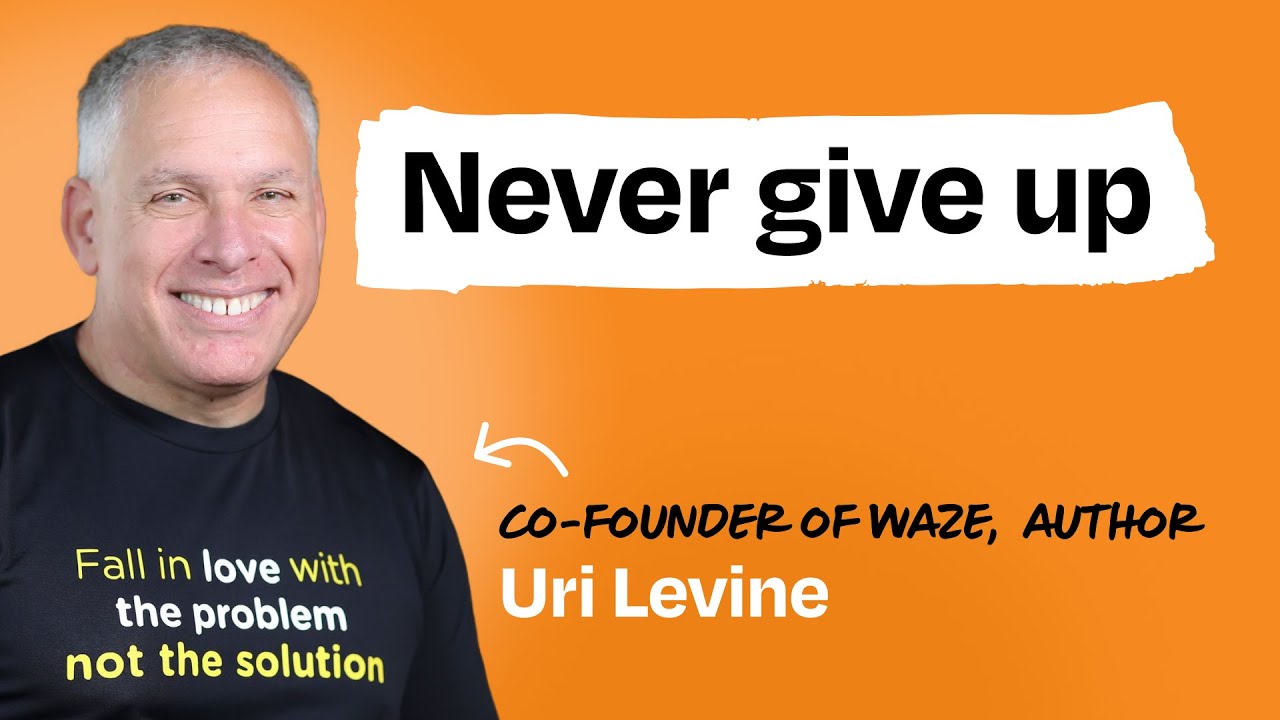
Lenny's Podcast episode, sponsored by WorkOS and Rippling, in which Lenny Rachitsky welcomes back Uri Levine, co-founder of Waze and nine other companies and author of Fall in Love with the Problem, Not the Solution, about the founder's guide to crisis management - the new chapter in his book's updated edition. Levine's taxonomy splits crises in two: the cash crisis, when a lost customer or disappearing investor jeopardizes the plan, and the loss of product-market fit, which sends you back to square one where everything you knew is irrelevant. His behavioral rules: never give up - the most important behavior of successful startup CEOs - and make decisions with conviction, because a team will not follow hesitation. On responsibility he is blunt: it is always the founder's fault, and that is good news, because assuming responsibility means you control your own destiny. Asked how to avoid crisis, his answer is that you cannot - building a startup is a journey from one crisis to the next. PARTIAL COVERAGE: this summary highlights the taxonomy and principles; case stories are not covered. These are Levine's own views, not independently verified.
Executive Summary (TL;DR)
Lenny's Podcast episode, sponsored by WorkOS and Rippling, in which Lenny Rachitsky welcomes back Uri Levine, co-founder of Waze and nine other companies and author of Fall in Love with the Problem, Not the Solution, about the founder's guide to crisis management - the new chapter in his book's updated edition. Levine's taxonomy splits crises in two: the cash crisis, when a lost customer or disappearing investor jeopardizes the plan, and the loss of product-market fit, which sends you back to square one where everything you knew is irrelevant. His behavioral rules: never give up - the most important behavior of successful startup CEOs - and make decisions with conviction, because a team will not follow hesitation. On responsibility he is blunt: it is always the founder's fault, and that is good news, because assuming responsibility means you control your own destiny. Asked how to avoid crisis, his answer is that you cannot - building a startup is a journey from one crisis to the next. PARTIAL COVERAGE: this summary highlights the taxonomy and principles; case stories are not covered. These are Levine's own views, not independently verified.