Key ideas from the world's best podcasts — simple, structured notes to help you learn faster and think better.

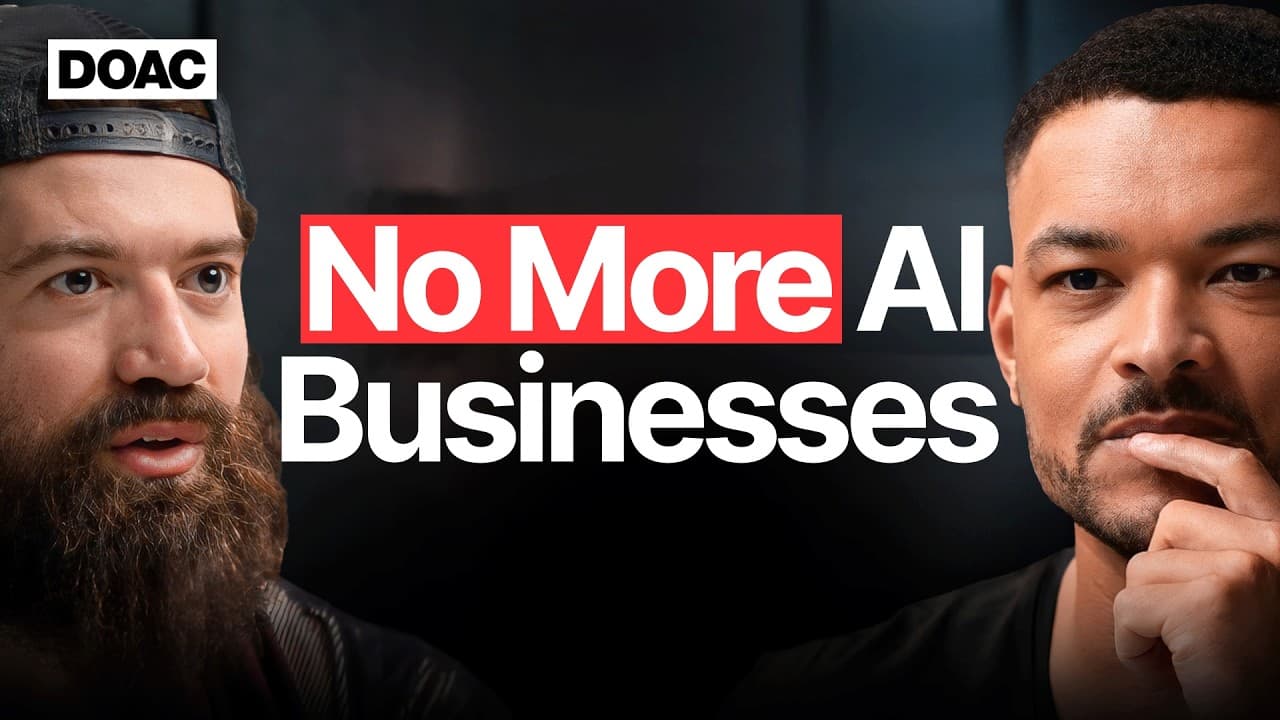
• The Diary Of A CEO with Steven Bartlett •
Alex Hormozi joins Steven Bartlett to discuss AI, practical businesses, reputation, long-term thinking, pricing and hiring. He argues that tools should improve the ordinary functions of a business, while people still carry judgment and risk. Business predictions are his views; this summary is not financial, legal or business advice.

Lenny Rachitsky
Lenny Rachitsky talks with product leaders, founders and operators about product, growth, leadership and careers. Guests share their experiences and practical methods; company claims and advice remain their accounts rather than guarantees.

Ganesh Prasad
Think School's Indian Business Podcast features long-form conversations with founders and business leaders about building companies, products and markets in India.

Shuang Esther Shan and Adam Levinter
Shopify's official podcast features conversations with founders and e-commerce experts about launching and growing businesses, products, marketing and suppliers.
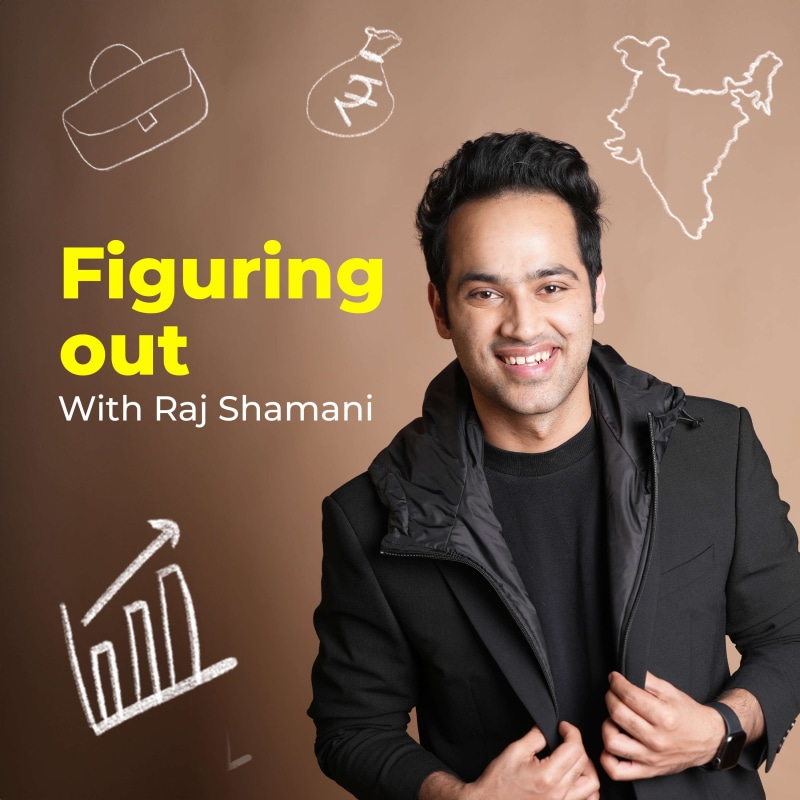
Raj Shamani
Figuring Out with Raj Shamani is a long-form interview podcast featuring entrepreneurs, business leaders, investors, athletes, experts, and influential personalities. Through candid conversations, the show explores entrepreneurship, money, business strategy, personal growth, careers, society, and the decisions behind success. Discover practical lessons, valuable perspectives, and ideas from people with experience across different industries.

Sam Parr and Shaan Puri
Sam Parr and Shaan Puri discuss business ideas, trends and opportunities. Guests join them to talk about how they built companies and found customers.

Tim Ferriss
Tim Ferriss interviews guests about the habits, decisions and ideas behind their work and lives. Conversations cover entrepreneurship, creativity, learning and personal experiments.

Tyler Cowen
Tyler Cowen hosts conversations about ideas, economics and culture. Some episodes reverse the interviewer role, as identified in their episode notes.

Steven Bartlett
The Diary Of A CEO is a long-form interview podcast hosted by Steven Bartlett. Candid conversations with entrepreneurs, authors, scientists, leaders and cultural figures explore business, psychology, health, relationships, personal growth and the ideas shaping modern life.

Joe Rogan
The Joe Rogan Experience is a long-form conversation podcast hosted by comedian, UFC commentator and broadcaster Joe Rogan. Episodes run for hours and feature guests from comedy, sport, science, business, medicine, politics and culture, with open-ended discussion across all of them.

Reid Hoffman, Jeff Berman and Bob Safian
Business leaders discuss building companies, testing products, leading teams and growing brands. Episodes include conversations hosted by Reid Hoffman, Jeff Berman and Bob Safian.

David Senra
David Senra interviews founders and entrepreneurs about how they build companies, develop products and make decisions. The show is separate from his Founders podcast.

Lex Fridman
Long-form conversations hosted by Lex Fridman, exploring science, technology, history, philosophy and the nature of intelligence.

Figuring Out with Raj Shamani
Raj Shamani sits down with Bryson DeChambeau - 2024 US Open champion, YouTube creator and golf-equipment builder - for a two-and-a-half-hour breakdown of the elite-athlete mindset. DeChambeau traces the wiring: a nine-year-old accused of cheating after winning his first tournament, abandonment issues and a fear of not being accepted, role-playing games like The Elder Scrolls that taught him progression, and the 2009 housing crash that pushed a 15-year-old to raise $2,000 door-to-door for tournament fees - including one stranger's $800 'angel check' he later tried to repay. He explains his lifelong hunt for 'distinct advantages': single-length irons he prototyped at 15 by grinding wedge heads to exchange head mass for shaft length, the strokes-gained logic (three yards farther beats six yards offline) behind his 2019 body transformation, speed training at 120 balls a session until his nervous system shook him awake at night, and the curved-face driver that preceded his 58 in 2023. He is candid about the costs: bulking to three times the heart-attack risk before losing 24 lbs in 30 days on a sensitivity-based whole-food diet, a broken hamate from overtraining in the cold, 14 missed cuts in a row in 2017, the lonely morning after winning the US Open, and becoming golf's villain in 2022 - then rebuilding his image by showing who he is on YouTube instead of telling. He closes with the death of his father in November 2022, the final putt at Pinehurst on Father's Day week, and a whiteboard framework for the next year: passion, three daily questions, health-mind-spirit, and outworking everyone. All figures, health claims and views are the speakers' own, not verified by us. FULL COVERAGE: the captions appear to cover the entire episode. Sponsor: a styling partner is named in the intro (auto-captions render it as 'Levice', likely Levi's). Nothing here is medical, investment, legal or financial advice.
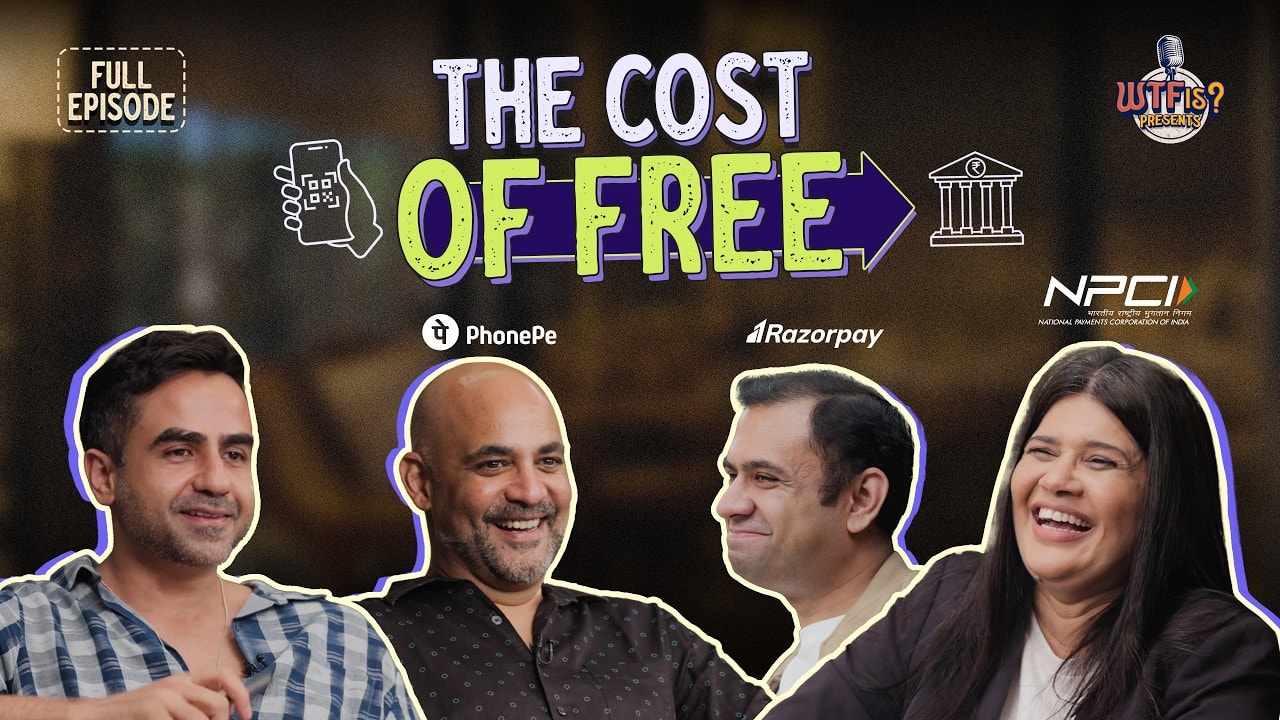
WTF is with Nikhil Kamath
Nikhil Kamath sits with the three people who run India's payment rails - Sohini Andani (ED Growth, NPCI), Harshil Mathur (co-founder, Razorpay) and Sameer Nigam (co-founder & CEO, PhonePe) - for a four-hour map of how money actually moves in India. They draw the six-party UPI diagram live (why your 100-rupee transfer is about 10 API calls across PhonePe, a sponsor bank, NPCI and two banks), break down who pays for 'free' UPI (an estimated 25 bips ecosystem cost, a 15-50 paise switching fee, and the zero-MDR decision that froze private investment), and retell the Flipkart Big Billion Day when 75-80 million waiting shoppers took down bank core systems. The conversation ranges across card economics (who really keeps the 2%), the regulation debate (caps, monopolies, banking licences, 'process is the punishment'), what payment data reveals about real India (tier-2+ is 65-70% of digital payments; 70% of e-commerce spend comes from 15 million households; a GST cut study), cross-border, CBDCs vs stablecoins, agentic commerce, and a closing panel with founders of Seven (payment rings), Dodo Payments (merchant of record) and PayGlocal (cross-border). All figures and views are the speakers' own. FULL COVERAGE: the captions appear to cover the entire episode. Sponsor: none stated. Nothing here is investment, legal or financial advice.

Figuring Out with Raj Shamani
Annie Jacobsen - investigative journalist and bestselling author of Nuclear War: A Scenario, Area 51 and Biological War - walks Raj Shamani through how civilization could end in 72 minutes. She explains fission versus fusion ('a thermonuclear bomb is so powerful, it uses an atomic bomb inside of itself as the fuse'), the numbers (about 12,500 nuclear weapons on the planet, 1,700 American ones on ready-for-launch, some airborne 60 seconds after a presidential order), and sole presidential authority: one person can authorize nuclear war without asking Congress, the defense secretary or anyone. She takes us minute by minute through her scenario - the six-minute decision window, launch on warning, the black book, the doomsday plane, the universal unlock code, 44 interceptor missiles with a 40-55% success rate, why US missiles aimed at North Korea must overfly Russia, and how that misunderstanding ends the world. Then the second half: why biological war scares the Pentagon more - 3,600 BSL-3/4 labs worldwide, no inspections because the weapons are illegal, a Soviet defector's confession that the plan was to 'kill everyone in the West and leave the infrastructure intact,' and the classified Devolution Plan to reconstitute the government after everyone dies. FULL COVERAGE: the captions appear to cover the entire episode. All accounts and claims are the guest's own reporting, not independently verified. Sponsor: Porter (title sponsor). Nothing here is professional or safety advice.

Think School: Indian Business Podcast
Think School explains why the 2026 US midterm elections scare every American president - and why AI companies are pouring record money into them. Sitting presidents have lost seats in 20 of the last 22 midterms, and Trump himself says 'when you win the presidency, you lose the midterm.' With Republicans holding exactly 218 House seats (218 needed) and a 53-47 Senate, a four-seat swing flips Congress and turns any president into what the episode calls a toothless tiger: laws blocked, budgets stalled, appointments frozen, investigations opened. The episode then explains the super PAC mechanism - unlimited legal corporate spending - through the story of Congresswoman Katie Porter, whose Senate run was buried by $10 million in crypto-industry ads that never mentioned crypto, and connects it to 2026's record $646 million in corporate political spending. The new players: Leading the Future (backed by OpenAI's Greg Brockman and a16z, $100 million pledged, demanding one national law and a 'build now, punish later' approach), Public First (Anthropic, $40 million, backing state safety rules and an aviation-style regulator for powerful AI models), and Meta ($65 million targeting state elections). Why India should care: 100 million weekly ChatGPT users, Claude's second-largest market, and the IMF's estimate that 40% of jobs worldwide are exposed to AI. FULL COVERAGE: the captions appear to cover the entire episode. All figures and claims are the episode's own narration, not independently verified. Sponsor: Whisper Flow. Nothing here is investment or professional advice.
Think School: Indian Business Podcast
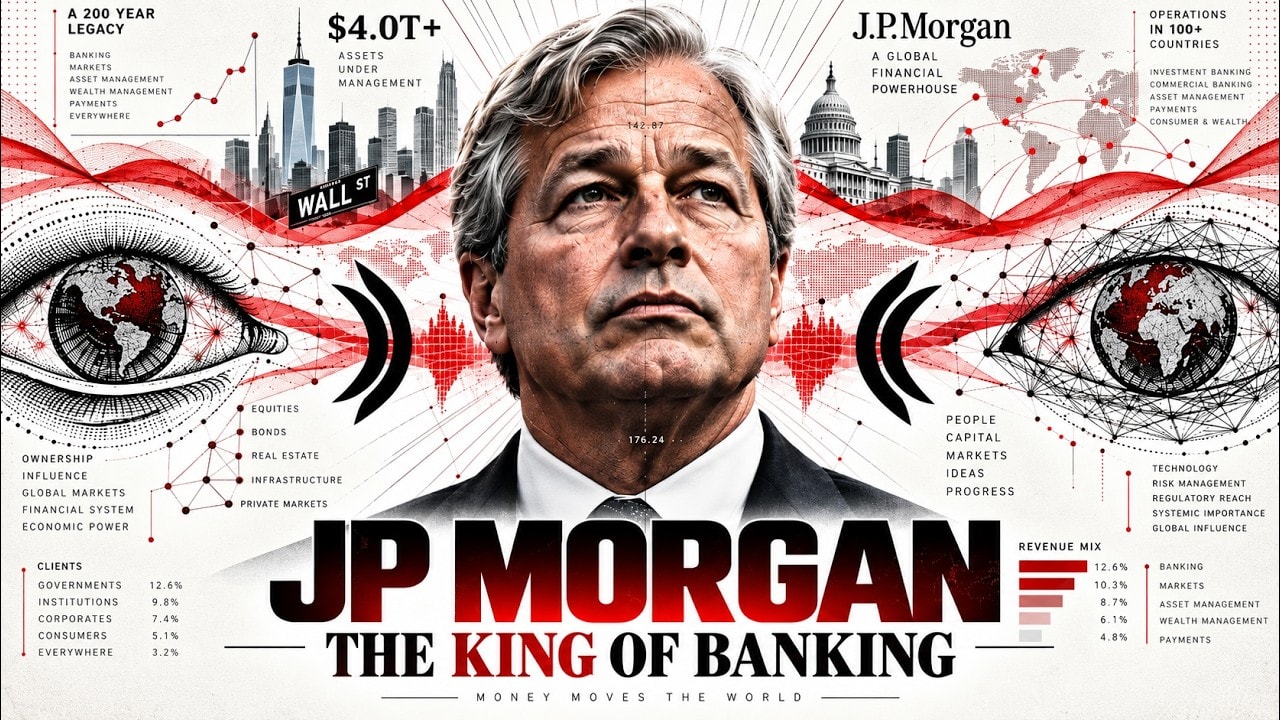
In 2008, while Lehman Brothers went bankrupt and Citigroup lost $27.7 billion, JP Morgan made a $5.6 billion profit - and bought a bank over a weekend. This Think School case study breaks down how Jamie Dimon turned the worst financial crisis of the century into an opportunity: why JP Morgan lent carefully while Wall Street laughed at him for playing too safe, how the Bear Stearns deal worked (a $1.2 billion price tag covered by the bank's own 47-storey Manhattan tower, with the Federal Reserve's Maiden Lane LLC absorbing $29 billion of $30 billion in risky mortgages), and how the Washington Mutual acquisition delivered over 2,000 branches, $160 billion in deposits and two of America's richest markets for $1.9 billion. By 2009, JP Morgan was the world's number one investment bank by fees. FULL COVERAGE: the captions appear to cover the entire episode. All figures and claims are the episode's own narration, not independently verified. Sponsor: Neuro (Neurogum). Note: YouTube's auto-captions garble several names (Jamie Dimon as 'Jamie Diamond', Lehman Brothers as 'Layman Brothers', Bear Stearns as 'Bear Stones', Citigroup as 'Croup'); these notes use the correct spellings while quotes stay verbatim from the captions. Nothing here is investment advice.
Figuring Out with Raj Shamani
Arunabha Ghosh - founder-CEO of the Council on Energy, Environment and Water (CEEW) and one of India's leading voices on climate and energy - explains to Raj Shamani why 98 of the world's 100 hottest cities are now in India and what that costs. His institute's district-level research: 8 out of 10 Indians live where extreme flood, cyclone or drought risk has jumped; 75% of India's 734 districts are now extreme-weather hotspots; and 40% of districts are swapping trends - flood-prone turning drought-prone and back. The economics: roughly $180 billion in heat-stress losses by 2030 (more than the entire IT industry earns), 30-40 million man-days lost when outdoor labor stops from noon to 4 pm, and an 8x rise in cooling demand by 2040 - the AC trap, where the fix heats the city further. He covers the energy-security shock (90% of India's oil imports, much through the Strait of Hormuz, and a budget built on $65 oil meeting $115-120 reality), who actually emits (power first, then steel/cement/aluminium; cumulatively the US, then Europe, then China), geoengineering's promise and danger, what Medellin, Singapore, Paris and Beijing got right, and three concrete opportunities for young founders - recycling, the bioeconomy and next-generation energy hardware. (This episode is in Hindi; all notes are in English and translated quotes are marked.) FULL COVERAGE: the captions appear to cover the entire episode. All figures and claims are the guest's and his institute's research, not independently verified. Sponsor: none stated in the episode. Nothing here is financial or professional advice.

Figuring Out with Raj Shamani
Robert J. O'Neill, the former SEAL Team 6 operator who says he fired the shots that killed Osama bin Laden, sits down with Raj Shamani in New York for his most detailed account of the Abbottabad raid. He describes the three weeks of training after a CIA analyst - a woman who had worked the target for years, seven days a week - told 28 senior operators 'this is as close as we've ever been'; the handwritten letters to his daughters on a mission he treated as one-way; the stealth helicopter that lost lift and crash-landed in the compound's front yard; the fake door that confirmed bin Laden was inside; walking up the last flight of stairs behind a point man who tackled two people he thought were suicide bombers; and the moment in the bedroom. Then the aftermath: 47 minutes on target, a 90-minute flight counting down to Afghanistan, breakfast sandwiches next to the body while President Obama announced it on TV, and a hard transition to civilian life - no degree, no plan, healthcare ending at midnight - that became a second career as a speaker and author. His closing advice: don't quit today, quit tomorrow. FULL COVERAGE: the captions appear to cover the entire episode. All accounts, figures and claims are the guest's own, not independently verified; his claim to have fired the fatal shots is his own publicly stated account. Sponsor: Porter (title sponsor). Nothing here is professional advice.

WTF is with Nikhil Kamath
Nikhil Kamath spends a week in San Francisco asking the people building AI whether it is a bubble. His panel: Akshay Kothari, co-founder of Notion; Azalia Mirhoseini and Anna Goldie, the Google Brain duo behind AlphaChip who were Anthropic employees 25 and 26 and have now co-founded frontier lab Ricursive Intelligence; and Vijay, a founder in the AI data-training space whose platform spans five million knowledge workers. The conversation maps the full AI stack - chips and data centres, frontier labs, neolabs like SSI and Ricursive, data trainers like Turing, Mercor, Surge and Scale, inference providers, applications and services - then goes layer by layer: why Ricursive is building AI that designs chips to break the hardware lottery, why training data work is obsolete every nine months, what recursive self-improvement means and why the cost of intelligence is its metric, and how Notion's agent users went from 1% to 30% in under a year. Nikhil's framing number: about $700 billion spent or committed on AI this year against about $100 billion of AI enterprise revenue. FULL COVERAGE: the captions appear to cover the entire episode. All figures and claims are the speakers' own, not independently verified. Sponsor: none stated in the episode. Nothing here is investment advice.
Think School: Indian Business Podcast
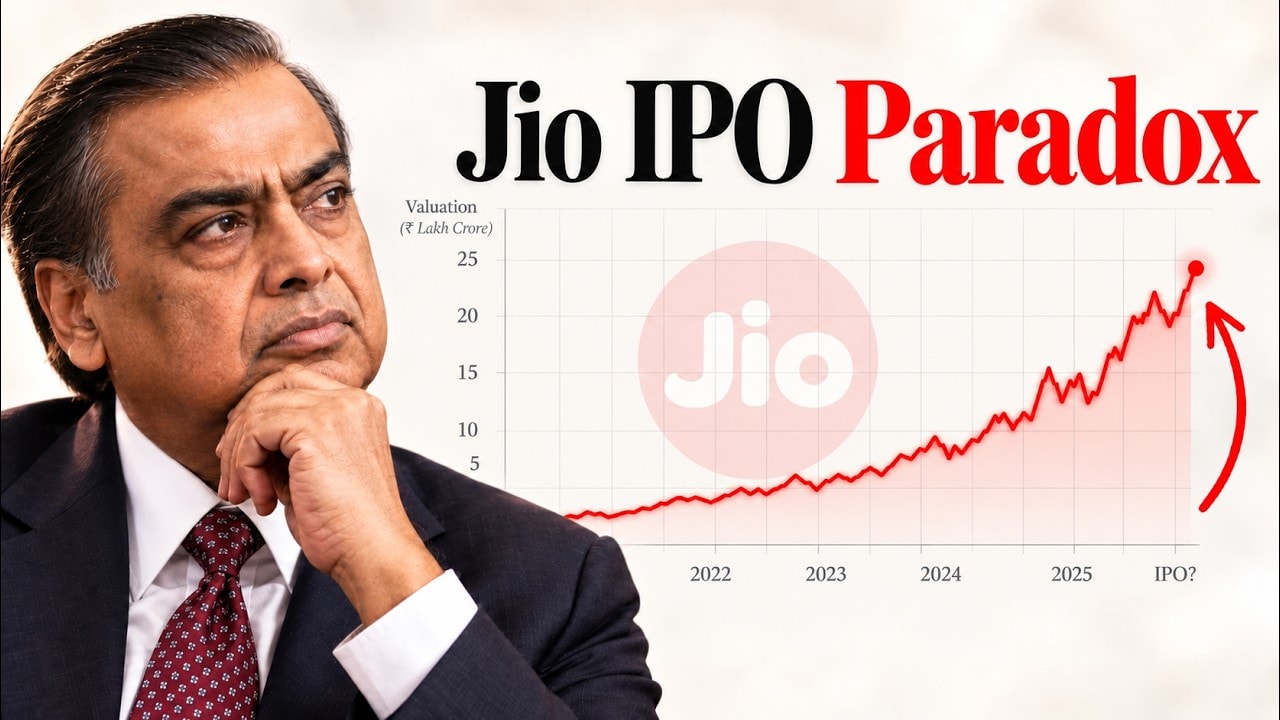
Think School reads Jio's 528-page draft IPO prospectus beyond the headlines. The video lays out Jio's headline numbers of 1.46 lakh crores in revenue, about 30,000 crores in profit and 524 million customers, then explains the business as one equation - revenue equals users times average revenue per user - across a six-level pyramid from 2G India to enterprises. It surfaces three things it says the headlines are missing: an outstanding spectrum obligation of 1.04 lakh crores that costs about 40 percent of profits a year until 2038, a deferred tax pile of 55,611 crores that kept the actual tax paid at 118 crores against a 10,300 crore paper bill, and a real free cash flow of about 20,300 crores that needs roughly 18 rupees more per user per month to hold steady. It closes with four growth engines - recharge prices, home broadband, small business digitization and AI distribution - and three risks: price-sensitive customers, the next capex cycle and satellite internet. FULL COVERAGE: the captions appear to cover the entire episode. All figures are as read from the DRHP by the channel, not independently verified, and the channel states it is not a SEBI registered adviser. Sponsor: none stated in the episode. Nothing here is investment advice.
Figuring Out with Raj Shamani
Ayyoub El Osrouti, a 27-year-old ultra runner from a Moroccan family in Germany, joins Raj Shamani after running 93 loops - about 623 kilometers - in a Backyard Ultra, a race of 6.7 kilometers every hour on the hour where only the last man standing finishes. He explains why his body, not his mind, ended the race: a swollen right side, an inner thigh inflamed from loop 40 and an Achilles problem from loop 87, and how four years of training taught him the line between discomfort and damage. He describes sleeping about 60 minutes across 93 hours in four-to-five-minute naps between loops, the hallucinations that come when sleep slips, and the David Goggins books and podcasts that turned him from a self-described black sheep who worked in his father's supermarket from age ten into a professional ultra runner coached by world record holder Sam Harvey. He also walks through his full training week of easy runs, intervals at 85 to 90 percent of race pace, long weekend sessions and three gym days. PARTIAL COVERAGE: this summary is built from the first portion of the episode's captions, roughly the first hour of a nearly three-hour conversation. All claims are the guest's own, not independently verified. Sponsor: ASUS ExpertBook. Nothing here is medical or training advice.
Figuring Out with Raj Shamani
Rob Henderson, author and social scientist known for his luxury beliefs idea, joins Raj Shamani in New York for a wide conversation on status, class and money. They cover why people lie in the first minutes of a conversation and how the dark triad of traits peaks in the late teens and early twenties, whether the rich or the poor crave status more, how status symbols moved from luxury goods to cultural capital, why education now drives who marries whom, and why the affluent adopt beliefs that signal status while others pay the cost. Henderson also gives his own 12-month plan to move from low to high status and explains the data on male risk-taking and violence. FULL COVERAGE: the captions appear to cover the entire episode. All claims are Henderson's own views and the research he cites, not independently verified. Sponsor: none stated in the episode description. Nothing here is medical, legal or financial advice.

WTF is with Nikhil Kamath
Before the fame, what were they like? This Stitch'd montage rewinds to the childhoods of Ranbir Kapoor, Kriti Sanon and other well-known Indians from film, music, cricket and business. Ranbir Kapoor recalls Bombay Scottish, canes and duster-on-knuckles discipline, 54.3% in his 10th boards, dropping out of film school in New York and living on a $2 McDonald's menu for lunch and dinner because his father kept him on a tight budget. Kriti Sanon describes being an extremely shy, stage-frightened firstborn who hid in her mother's dupatta - until dance (five years of kathak at Kathak Kendra) gave her a stage. A rapper remembers being a government sub-divisional officer in Himachal Pradesh while writing for an underground Honey Singh; a composer raised by a single mother who rented out his late father's instruments; a cricketer from Mangalore who picked up a plastic bat at two and a half; and a founder from Indore who scaled his father's detergent business from 40 lakhs to ten times that in 18 months. FULL COVERAGE: the captions appear to cover the entire episode. The episode is a voice montage and does not always name each speaker on screen; these notes name only speakers confirmed by the video's title or clearly identifiable from the content itself, and quotes are verbatim from the captions. Sponsor: none stated in the episode. Nothing here is professional advice.