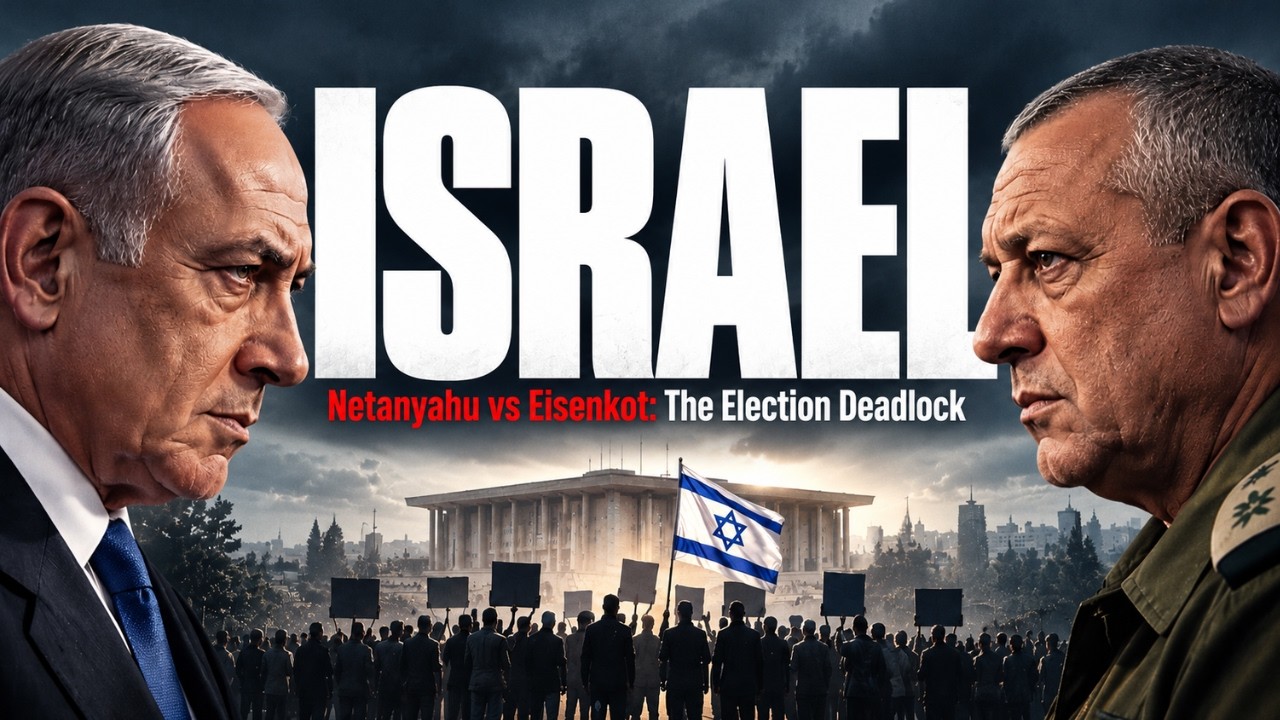


Israel's Election Shock! | How Netanyahu Lost His Majority and Why the World Is Watching?
Think School breaks down Israel's most consequential election in decades - the first national vote since the October 7 Hamas attack - and why a country of barely 10 million people holds a lever over the price of gold, food, petrol and even Indian home-loan EMIs. FULL COVERAGE: notes span the entire video. Sponsor: Neurogum (Neuro Memory and Focus gum and mints). All results, figures and claims are as stated in the video; attribute them to the episode, not to us. The result as told: Netanyahu's bloc took 53 seats, challenger Gadi Eisenkot's bloc 48, and with the majority mark at 61, the Arab parties' record 19 seats - won on unprecedented turnout - make them the kingmakers in a Jewish state's first post-October-7 election. The episode explains Israel's paradox: a startup powerhouse with more NASDAQ-listed companies than any country outside China and the US, built atop one of the world's most unstable political systems - 37 governments in 78 years, five elections in under four years, three years without a national budget, and once an invented 'alternate prime minister' post. The cause, it argues, is pure proportional representation: 10% of the vote means 10% of the 120 seats, so a dozen parties squeeze in and coalitions of six can collapse overnight - contrasted with India's first-past-the-post system and its caste-politics incentives. Why the world watches: Israel is the region's most advanced military power, believed to have nuclear weapons, and its wars move global trade - Red Sea container traffic crashing about 90% when the Houthis attacked shipping, adding two weeks and 4-5x shipping costs, and Iran's February 2026 closure of the Strait of Hormuz (20% of world oil) triggering, in the video's telling, a historic oil shock. Why India watches harder: India is the biggest buyer of Israeli weapons, and the India-Middle East-Europe Economic Corridor - promising goods to Europe up to 40% faster and 30% cheaper - has its missing link running right through Israel. The two contenders agree on outcomes but not philosophy: Netanyahu wants regime change in Tehran and military pressure in Gaza; Eisenkot, his former army chief, calls regime change unrealistic and prefers targeted strikes, sanctions and a US-backed handover of Gaza to Palestinian technocrats. The sting: Eisenkot plus the Arab parties equals 67 seats, but he has publicly promised never to form a government with them - leaving three exits (break the promise, poach seats, or a unity government) or a sixth election in seven years.