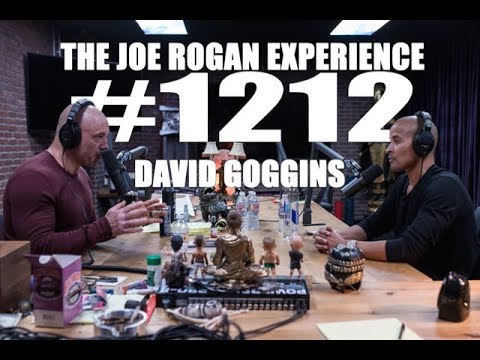
The audiobook adds conversation to the written story
⏱ Selected coverageGoggins describes working with Adam Skolnick, whose reading is interrupted by their discussions between sections. Rogan says the format reveals context and a relationship that a straightforward reading would not. The production choice is part of how the story becomes accessible.
The public image hides continuing vulnerability
⏱ Selected coverageGoggins says he remains shy and has to prepare himself even for a podcast appearance. He rejects the assumption that visible achievement means an absence of fear or insecurity. His account presents change as repeated work rather than a permanent switch into a fearless identity.
Starting again is part of his story
⏱ Selected coverageGoggins describes a sequence of improvement, setbacks and rebuilding rather than one clean rise. Rogan contrasts that with the tidy version of success people often imagine. Goggins says that returning to the starting point became familiar, although not easy.
Accountability begins with the story told to oneself
⏱ Selected coverageGoggins describes changing his inner dialogue, the image he tried to present to others and what he calls an accountability mirror. He frames past hardship as training in his own life. That interpretation is his coping narrative, not a claim that abuse is necessary or beneficial.
Physical effort was a route to self-respect for him
⏱ Selected coverageGoggins says his exercise was initially about mental discipline rather than sporting status. He describes repetition as a way of confronting avoided tasks. His extreme methods are not a general program for readers, and the conversation's suffering language does not establish the safety of ignoring pain.
Internal motivation cannot always rely on a soundtrack
⏱ Selected coverageGoggins explains why he often avoids music when training and describes a contrasting case of repeating a Rocky track during a pull-up attempt. The point is his interest in what he can tell himself when external encouragement is absent, not a rule that music invalidates another person's work.
Ownership and arithmetic change a large project
⏱ Selected coverageGoggins recounts rejecting publishing offers and valuing the life represented in his book. He also describes breaking a pull-up record target into repetitions, minutes and rest rather than rejecting the total immediately. These are his examples of ownership and planning, not financial advice or a recommended workout.