


Strange Fall of Oracle | How a $300 Billion AI Deal Changed Everything?
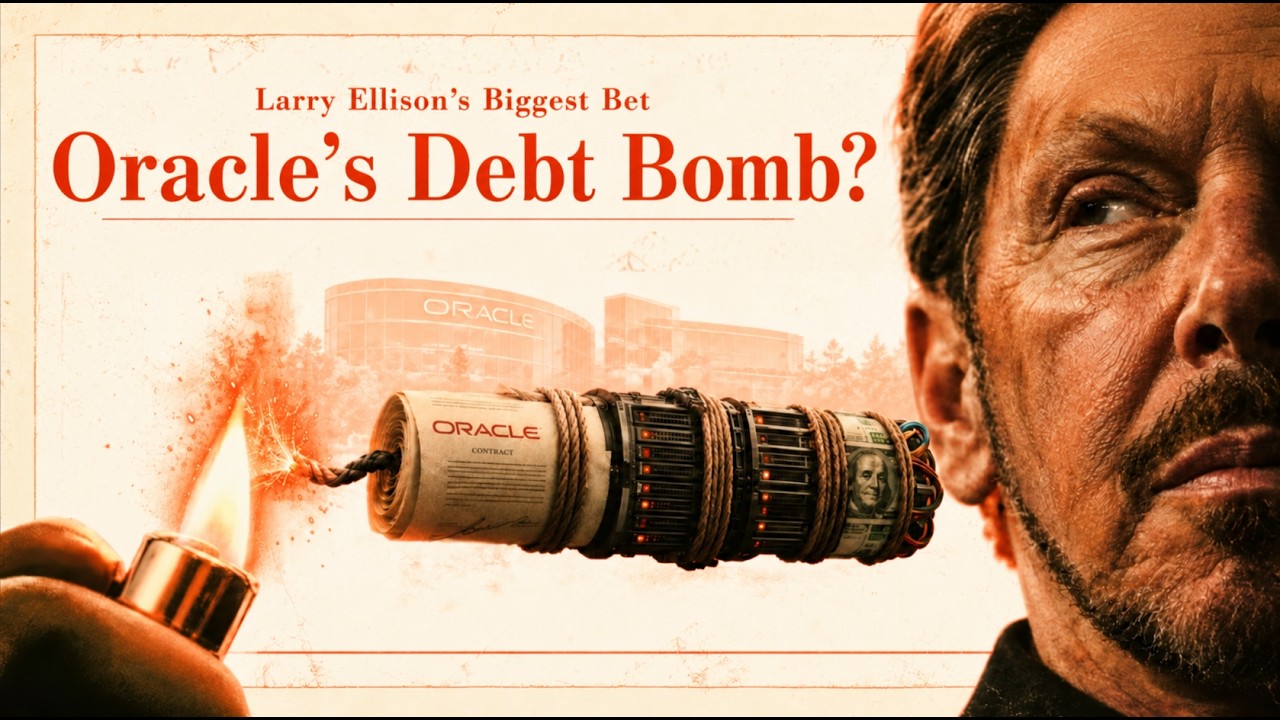
Think School explains how Oracle went from the hottest stock of 2025 to a 56 percent fall from its peak. The video traces Oracle's original model of selling database software while customers owned the machines, how Amazon Web Services inverted that model by renting computing by the hour, and how the September 2025 announcement of a roughly $300 billion, five-year computing deal with OpenAI inflated Oracle's remaining performance obligations to $455 billion and briefly made Larry Ellison the world's richest man. It then shows why investors turned skeptical: the deal flips Oracle into an asset-heavy build-now-rent-later business funded by borrowing, OpenAI's promise of about $60 billion a year is many times its own revenue at the time, and a stress test shows interest costs climbing toward half of profits while credit default swap prices signal four times the earlier default nervousness. FULL COVERAGE: the captions appear to cover the entire episode. All figures are as stated by the channel, not independently verified. Sponsor: none stated in the episode (the outro promotes the channel's own job application form). Nothing here is financial advice.
Executive Summary (TL;DR)
Think School explains how Oracle went from the hottest stock of 2025 to a 56 percent fall from its peak. The video traces Oracle's original model of selling database software while customers owned the machines, how Amazon Web Services inverted that model by renting computing by the hour, and how the September 2025 announcement of a roughly $300 billion, five-year computing deal with OpenAI inflated Oracle's remaining performance obligations to $455 billion and briefly made Larry Ellison the world's richest man. It then shows why investors turned skeptical: the deal flips Oracle into an asset-heavy build-now-rent-later business funded by borrowing, OpenAI's promise of about $60 billion a year is many times its own revenue at the time, and a stress test shows interest costs climbing toward half of profits while credit default swap prices signal four times the earlier default nervousness. FULL COVERAGE: the captions appear to cover the entire episode. All figures are as stated by the channel, not independently verified. Sponsor: none stated in the episode (the outro promotes the channel's own job application form). Nothing here is financial advice.