Host: Guy Raz
Guy Raz interviews founders about how they built their businesses, including early decisions, setbacks and changes in direction. The show began at NPR; current episodes are distributed by Wondery. Historical NPR Resilience Edition live Q&As are labelled separately. Summaries report the speakers' accounts, not independently audited business results.
Read structured takeaways and actionable insights from How I Built This with Guy Raz
How I Built This with Guy Raz
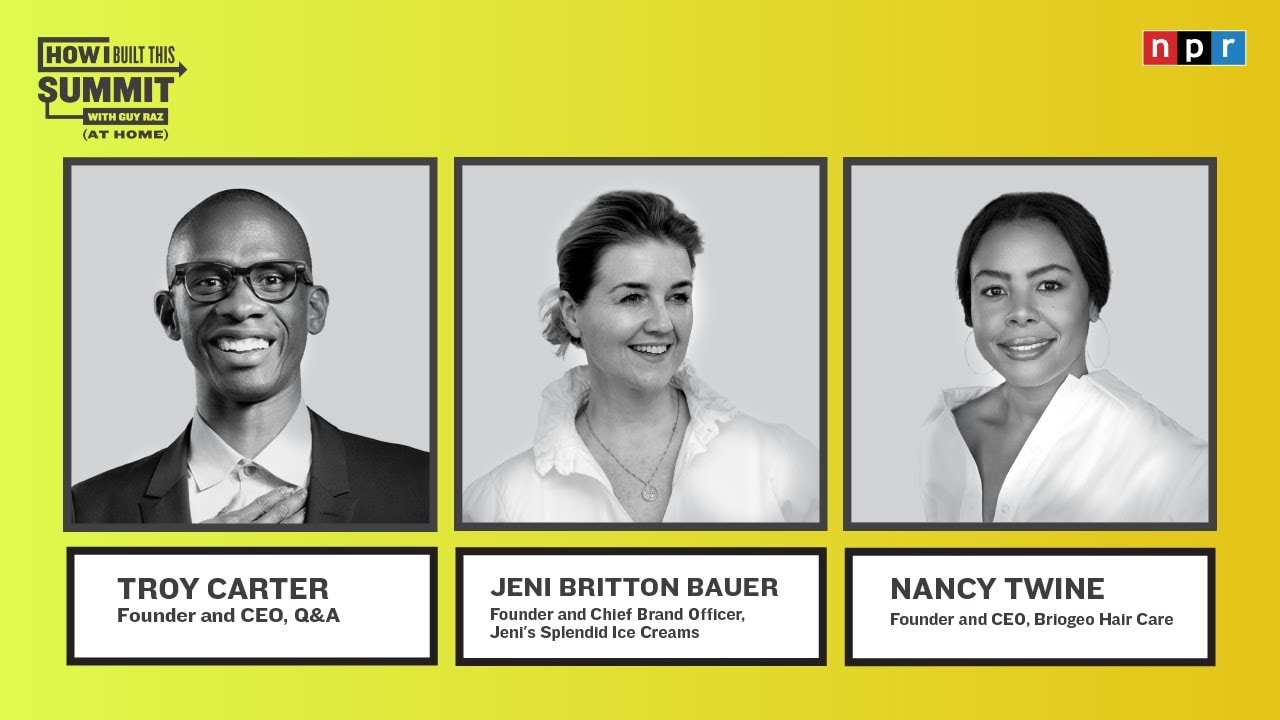
Jeni Britton Bauer, Nancy Twine and Troy Carter discuss sampling, product storytelling, influencer partnerships and marketing music with Guy Raz. Their examples connect a good product to repeated exposure and a clear reason for customers to talk about it. These notes cover selected business passages from the full returned public captions. NPR identifies the recording as May 24, 2021 at the How I Built This Summit (at Home); August 11, 2021 is the verified YouTube upload date. Technical problems near the end make the final exchange hard to follow, and it is not reconstructed here. Figures, products and company roles are historical speaker claims. Bereavement and incidental political references are not summarized.
How I Built This with Guy Raz
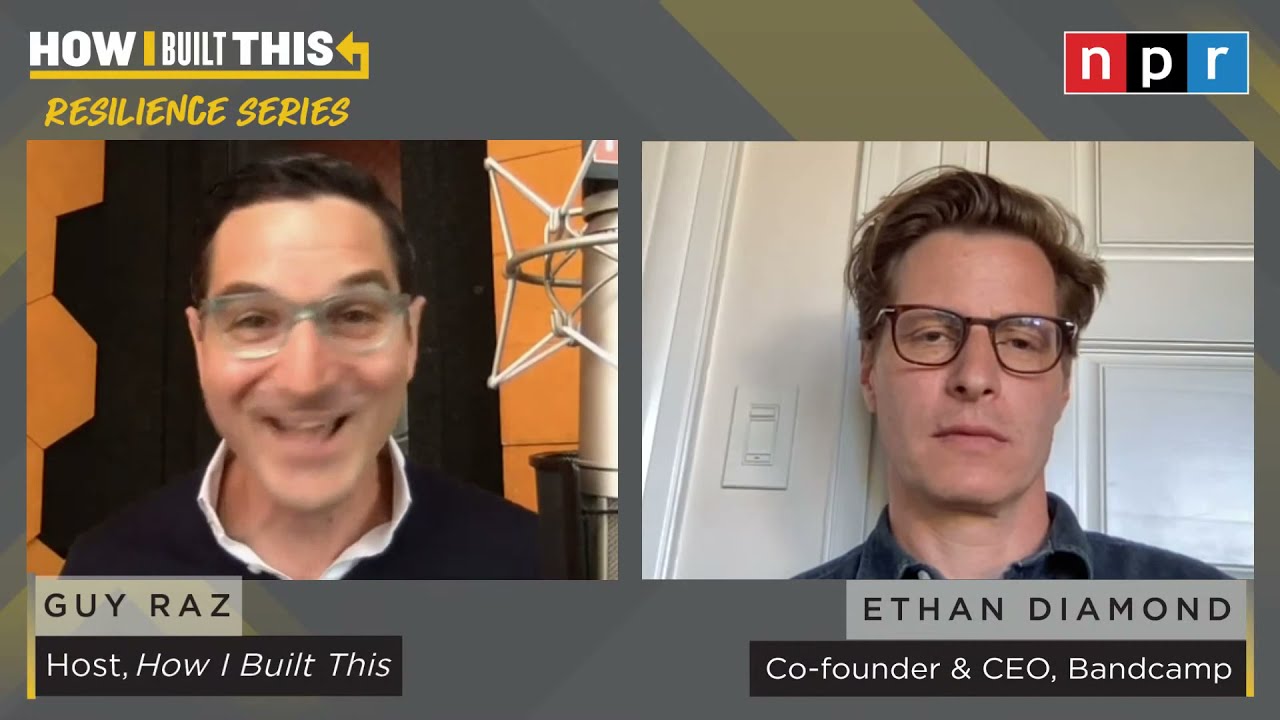
Ethan Diamond explains Bandcamp's artist-first marketplace to Guy Raz in an April 2021 NPR live Q&A. He traces the idea to a frustrating direct music purchase, explains why profitability mattered to control of the company, and describes community discovery and ticketed streams with merchandise. Notes cover selected business passages from the full public auto-captions. The April 1 date is the full-video upload; NPR released a shorter audio excerpt on April 8, 2021. Revenue shares, features, ownership/control and artist-support programs describe that historical moment, not current Bandcamp terms. Political fundraiser and regulation remarks, personal anxiety and NFT speculation are not summarized.
How I Built This with Guy Raz
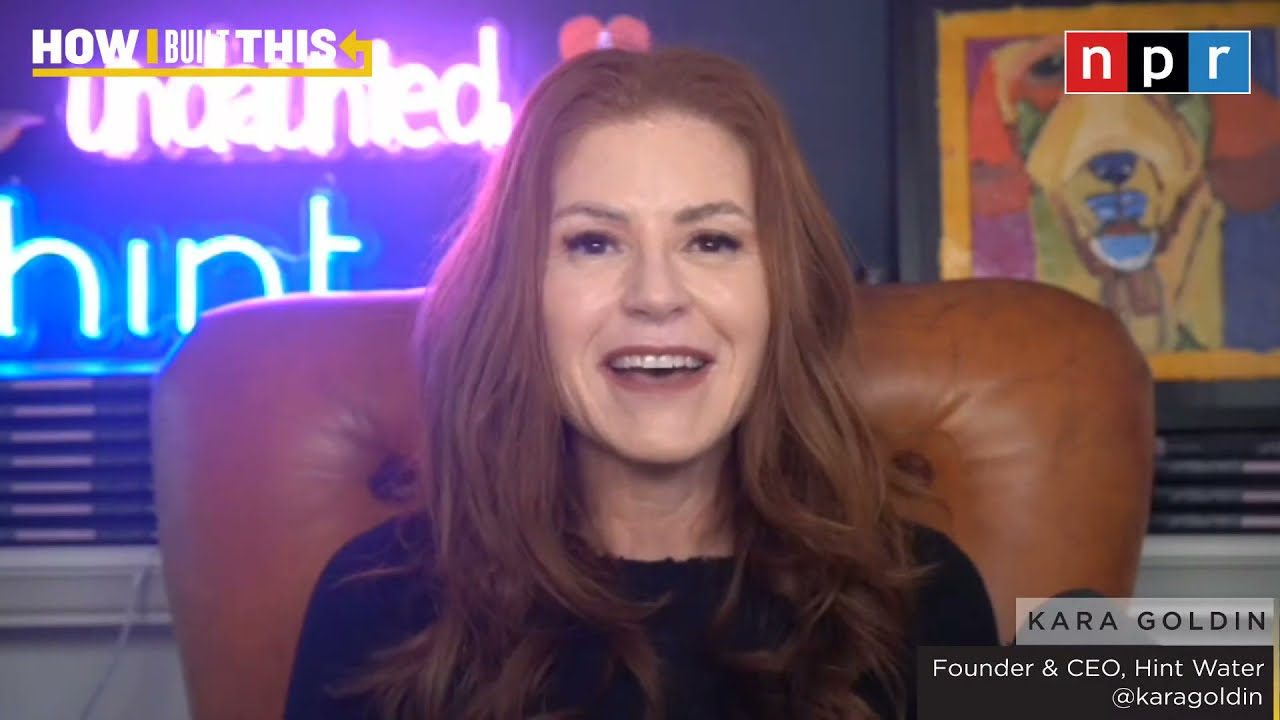
Hint Water founder and CEO Kara Goldin tells Guy Raz how she built a fruit-flavored water brand with no preservatives, how she caught a Target stockout from customer complaints and fixed supply, why the direct-to-consumer arm tripled in a year, and her case on plastic packaging. TL;DR Goldin spotted empty Target shelves the register data said were fine, treated in-stock supply as a duty of an essential product, and pushed the direct-to-consumer business she already had, which then tripled. Live Q&A from the COVID era. Based on first ~25,000 caption characters covering essentially the full session; one brief remark on recycling regulation is incidental. Details come from machine-generated captions and the guest's own claims; business figures are not independently checked. Topics are untimed; metadata follows YouTube. Source: https://youtubetotranscript.com/transcript?v=mUuiFbJCH9M
How I Built This with Guy Raz
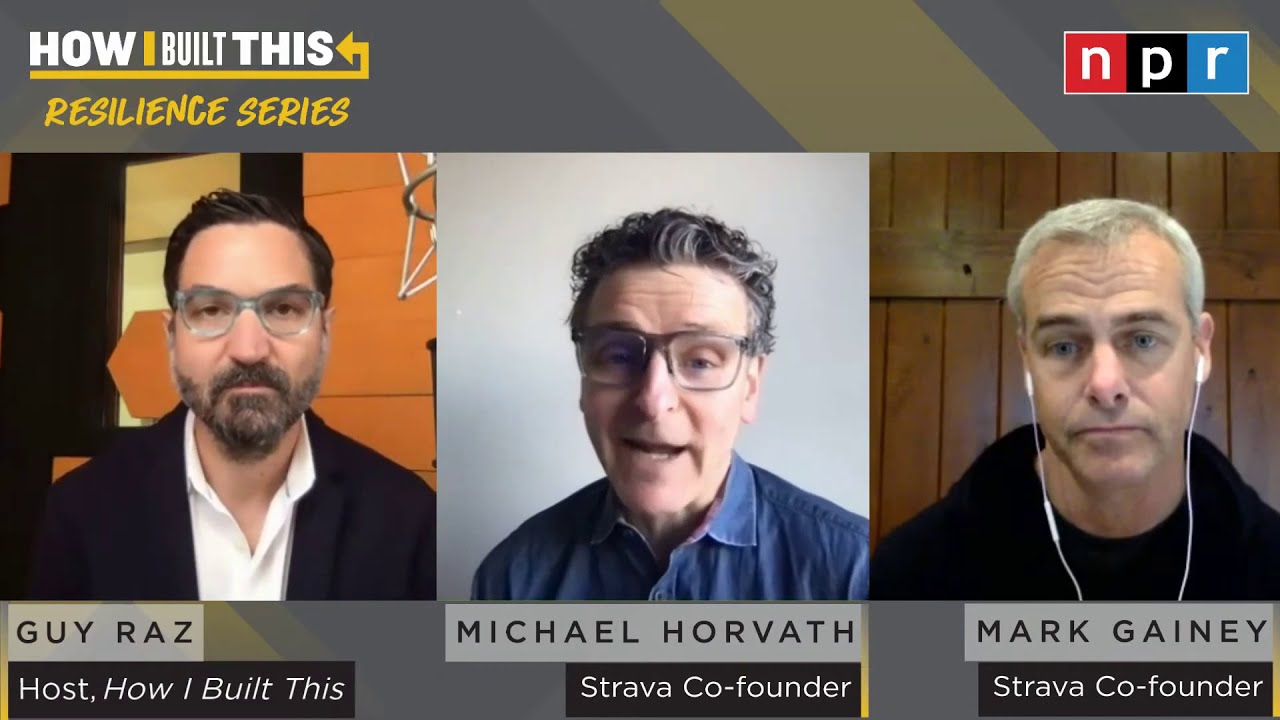
Strava co-founders Michael Horvath and Mark Gainey tell Guy Raz how the social platform for athletes passed 76 million users, why they stabilized the business and moved features behind the paywall in the middle of 2020, and how challenges like a million-person 5k keep the community growing. TL;DR Strava committed to a subscription model, added about 70 features in 2020, and moved the paywall during the pandemic, betting that free members who love the product will choose to pay. Live Q&A recorded during the COVID-19 pandemic, so work-from-home and pandemic context runs throughout. Based on first ~40,300 caption characters, covering most of the 42-minute session. Details come from machine-generated captions and the guest's own claims; business figures are not independently checked. Topics are untimed; metadata follows YouTube. Source: https://youtubetotranscript.com/transcript?v=RvqWDah1JNc
How I Built This with Guy Raz
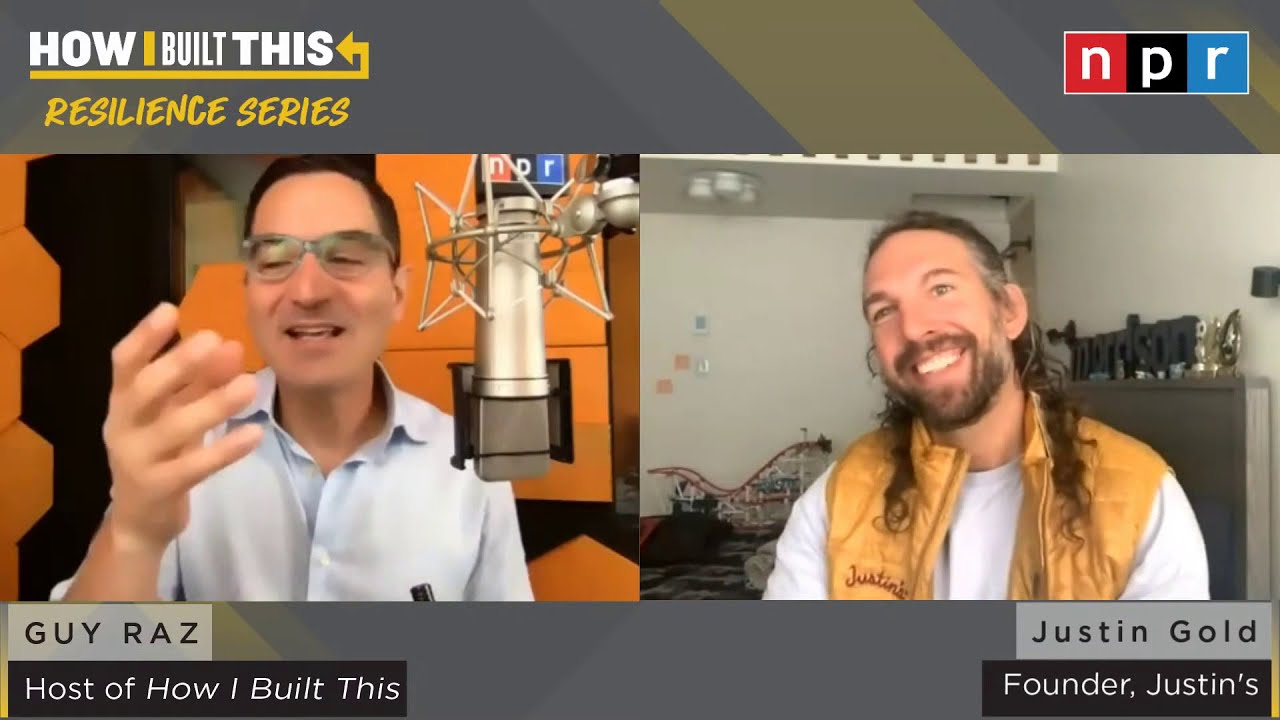
In this historical NPR Resilience Edition live Q&A from October 2020, Guy Raz talks with Justin's founder Justin Gold about nut butter, squeeze-pack differentiation and growing outward from a home market. Gold also describes narrowing the product range to meet a 2020 demand surge. Notes cover selected business passages from the full public auto-captions, not wellbeing references or the election-week introduction. This is a COVID-era live session, not a standard founder profile episode. Date is the verified YouTube upload date. Manufacturing and retailer claims are Gold's account of the period, not current results or an independent audit.

How I Built This with Guy Raz
Bossy Cosmetics founder Aisha Fatima Dozie tells Guy Raz how two decades in investment banking led to a beauty brand built on women's empowerment, why venture capital ignored her cold emails, how the word 'bossy' became untrademarkable, and how a supply chain spread across countries met 2020. TL;DR Dozie left banking, got no replies from VCs, started small with a mission to empower women to look, feel and do good, and says there has never been a lower barrier to trying a tiny product range. Live Q&A recorded during the COVID-19 pandemic, so work-from-home and pandemic context runs throughout. Guest name spelling confirmed from the video description. Details come from machine-generated captions and the guest's own claims; business figures are not independently checked. Topics are untimed; metadata follows YouTube. Source: https://youtubetotranscript.com/transcript?v=Qpf7qqJDZ6M
How I Built This with Guy Raz
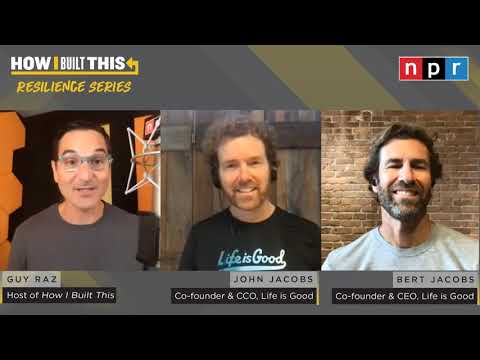
In this historical NPR Resilience Edition live Q&A from September 2020, Guy Raz asks Life is Good co-founders Bert and John Jacobs how they responded when wholesale orders collapsed. They describe direct garment printing, a shorter supply chain and designs made for the moment. Notes cover selected business passages from the full public auto-captions, not the emotional-wellbeing and nonprofit discussions. This is a COVID-era live session, not their standard founder profile. Date is the verified YouTube upload date. Sales, investment and operating claims are the founders' account of 2020, not current results or independent verification. Their workplace precautions are historical descriptions, not medical or safety guidance.

How I Built This with Guy Raz
Sarah Harden and Lauren Neustadter explain how Hello Sunshine develops stories, packages writers and cast, and chooses platform partners. They discuss keeping development and other business lines moving while filming was paused in 2020. Notes cover selected business passages from the full public captions, read through the closing announcements. July 28, 2020 is the verified full-video upload date and duration is 30:08; NPR published a shorter 17:06 audio excerpt on August 1. Company roles, projects, nominations and production forecasts belong to that historical moment. Health precautions are discussed as then-current production constraints, not current medical guidance; these notes do not reproduce them.
How I Built This with Guy Raz
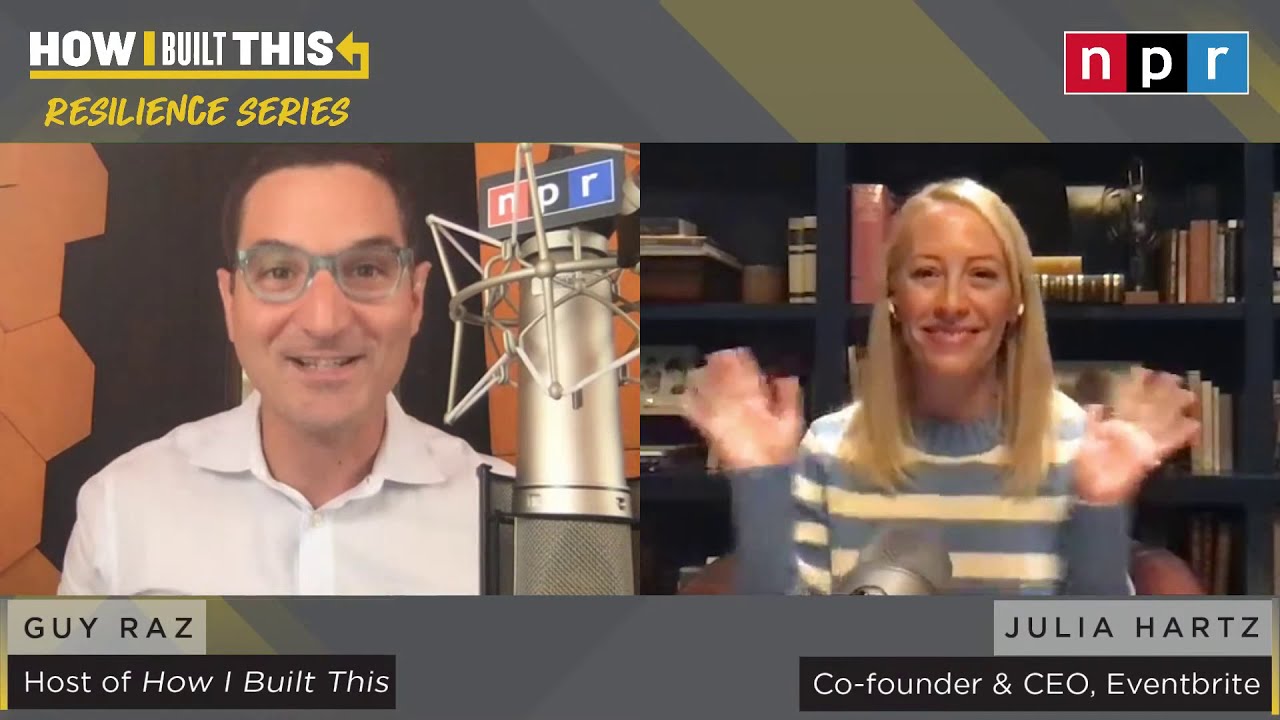
Julia Hartz joins Guy Raz for a historical live update on Eventbrite during the 2020 disruption to gatherings. She explains the shift toward virtual events, how free registration can bring creators and audiences to the platform, and what makes an online event worth attending. Notes cover selected business passages from the full public auto-captions for the 40-minute NPR live Q&A. The date is the July 10, 2020 full-video upload; NPR released a shorter edited audio version on July 16. Figures, free-event pricing claims and integrations describe July 2020, not current Eventbrite policy. Personal-distress, work-life and passing political-history remarks are not summarized.
How I Built This with Guy Raz
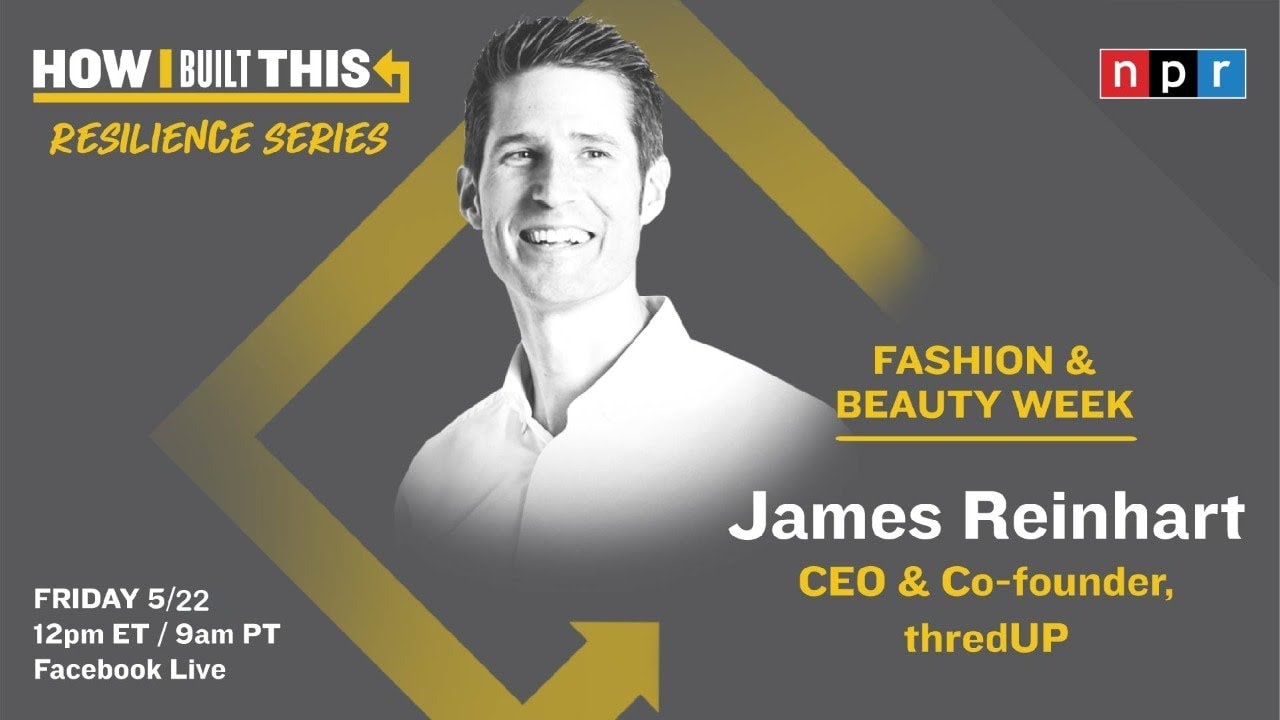
In this May 22, 2020 NPR live Q&A, thredUP co-founder and CEO James Reinhart explains how a secondhand-clothing marketplace responded to a sudden change in buying behavior and a surge of closet clean-outs. He discusses value pricing, processing capacity, retail partnerships and keeping a long-term view while daily conditions change. Notes cover selected business passages from the full public auto-captions, not a new origin-story interview. Prices, workforce measures, charity partners and operating conditions are historical claims from 2020, not current service terms. Safety guidelines, tax advice and personal-life remarks are not summarized.
How I Built This with Guy Raz
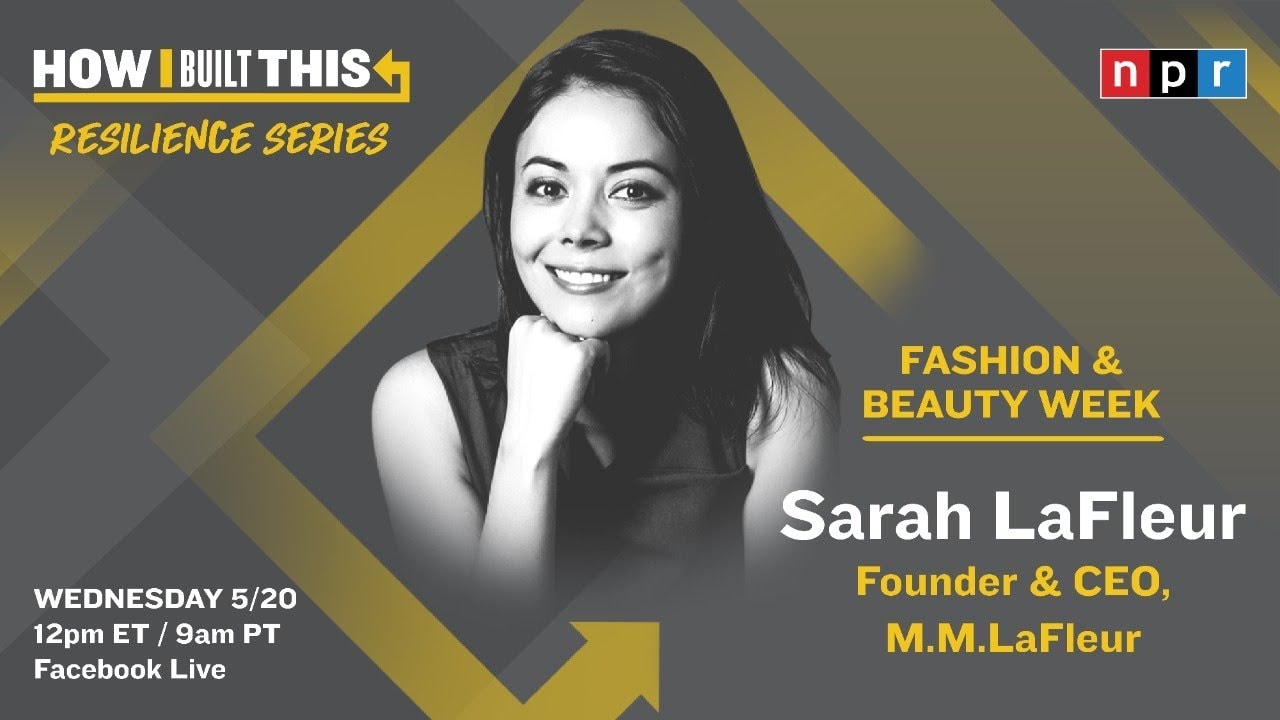
In this historical NPR Resilience Edition live Q&A from May 2020, Guy Raz asks M.M.LaFleur co-founder Sarah LaFleur how the workwear business adapted to early COVID-19 shutdowns. She describes virtual styling appointments, demand for power casual and shorter marketing payback periods. These notes cover selected business passages from the full public auto-captions, not mental-state advice or the political-candidate campaign. This is a live Q&A, not the standard founder profile episode. Date is the verified YouTube upload date; figures describe the business in May 2020 and are LaFleur's account, not a current performance report.
How I Built This with Guy Raz
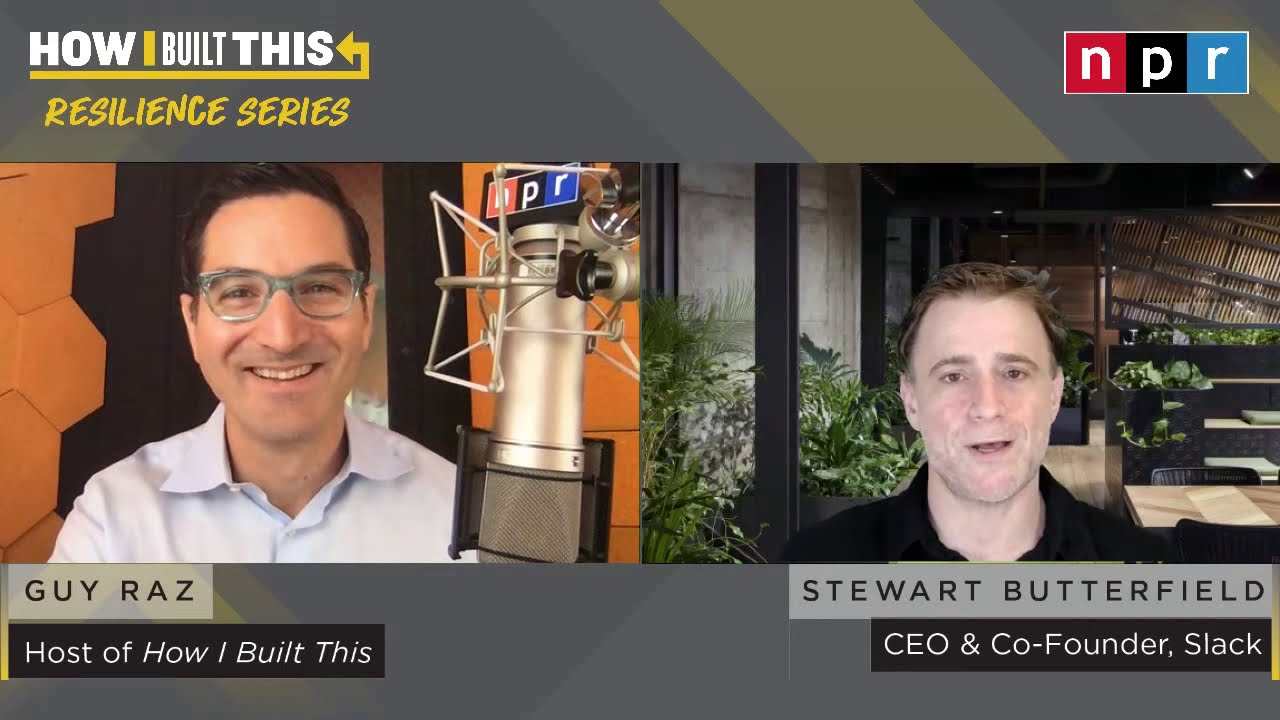
Slack co-founder and CEO Stewart Butterfield tells Guy Raz how Slack handled the work-from-home surge, why the pivot from a failed video game gave the company its product, what 110,000 paid customers meant for reading demand, and why leaders must reassure people and repeat the plan in a crisis. TL;DR Butterfield says forced change expands what seems possible, and in uncertain times people need to be reminded what matters, reassured, and clear on the plan. Live Q&A recorded during the COVID-19 pandemic, so work-from-home and pandemic context runs throughout. Based on first ~37,000 caption characters, covering essentially the full 40-minute session. Details come from machine-generated captions and the guest's own claims; business figures are not independently checked. Topics are untimed; metadata follows YouTube. Source: https://youtubetotranscript.com/transcript?v=lUc9ZC4oeqg