Find key takeaways from long-form podcast conversations.
Found 23 results across 21 episodes, 1 podcasts, 1 topics
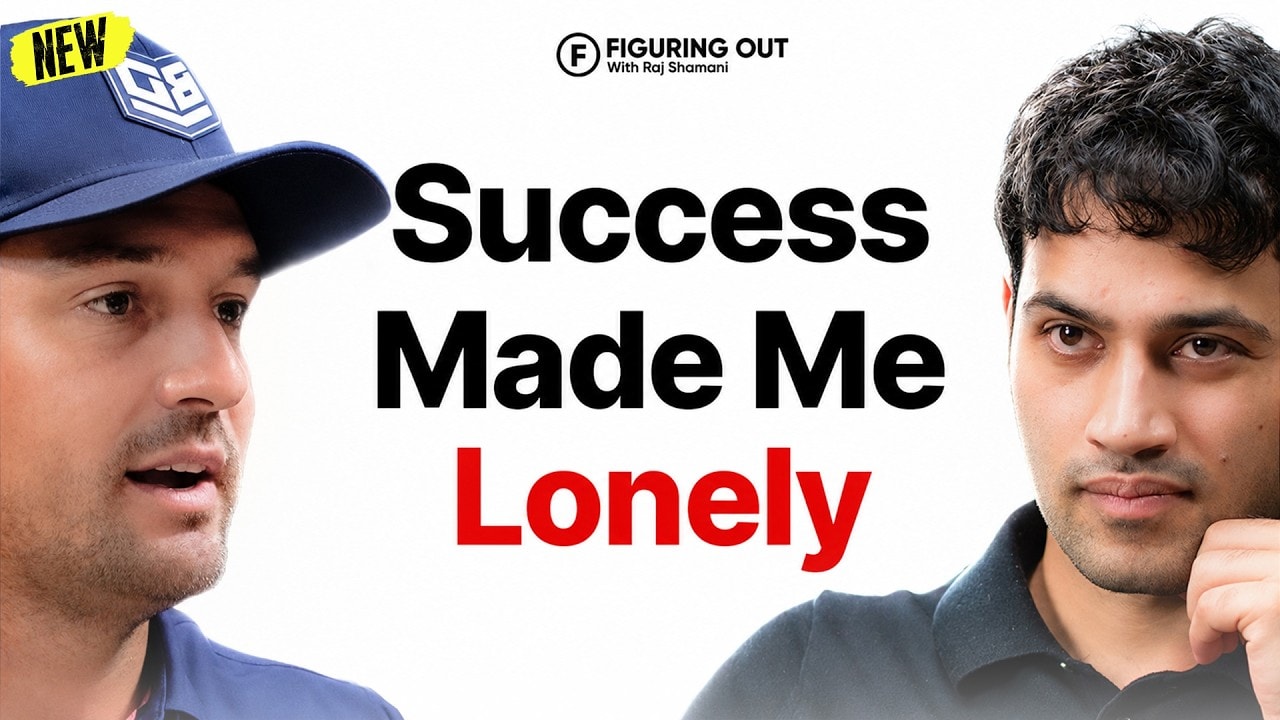
Figuring Out with Raj Shamani
Raj Shamani sits down with Bryson DeChambeau - 2024 US Open champion, YouTube creator and golf-equipment builder - for a two-and-a-half-hour breakdown of the elite-athlete mindset. DeChambeau traces the wiring: a nine-year-old accused of cheating after winning his first tournament, abandonment issues and a fear of not being accepted, role-playing games like The Elder Scrolls that taught him progression, and the 2009 housing crash that pushed a 15-year-old to raise $2,000 door-to-door for tournament fees - including one stranger's $800 'angel check' he later tried to repay. He explains his lifelong hunt for 'distinct advantages': single-length irons he prototyped at 15 by grinding wedge heads to exchange head mass for shaft length, the strokes-gained logic (three yards farther beats six yards offline) behind his 2019 body transformation, speed training at 120 balls a session until his nervous system shook him awake at night, and the curved-face driver that preceded his 58 in 2023. He is candid about the costs: bulking to three times the heart-attack risk before losing 24 lbs in 30 days on a sensitivity-based whole-food diet, a broken hamate from overtraining in the cold, 14 missed cuts in a row in 2017, the lonely morning after winning the US Open, and becoming golf's villain in 2022 - then rebuilding his image by showing who he is on YouTube instead of telling. He closes with the death of his father in November 2022, the final putt at Pinehurst on Father's Day week, and a whiteboard framework for the next year: passion, three daily questions, health-mind-spirit, and outworking everyone. All figures, health claims and views are the speakers' own, not verified by us. FULL COVERAGE: the captions appear to cover the entire episode. Sponsor: a styling partner is named in the intro (auto-captions render it as 'Levice', likely Levi's). Nothing here is medical, investment, legal or financial advice.
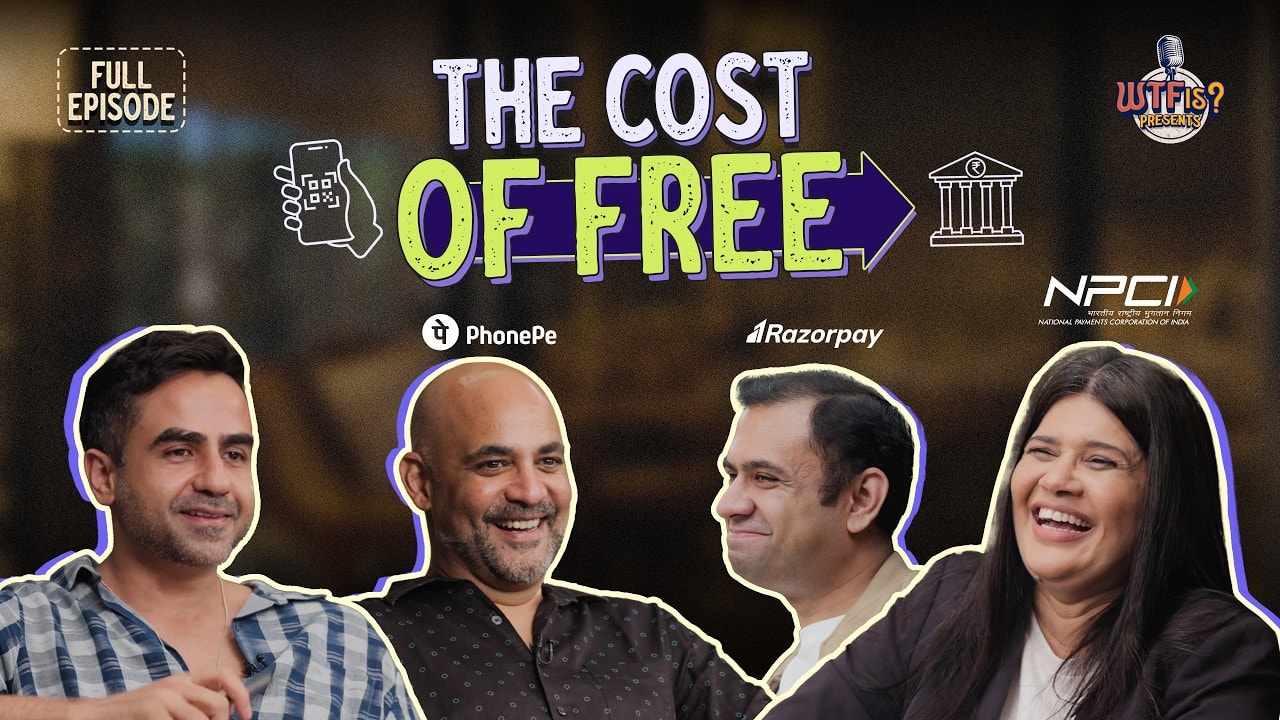
WTF is with Nikhil Kamath
Nikhil Kamath sits with the three people who run India's payment rails - Sohini Andani (ED Growth, NPCI), Harshil Mathur (co-founder, Razorpay) and Sameer Nigam (co-founder & CEO, PhonePe) - for a four-hour map of how money actually moves in India. They draw the six-party UPI diagram live (why your 100-rupee transfer is about 10 API calls across PhonePe, a sponsor bank, NPCI and two banks), break down who pays for 'free' UPI (an estimated 25 bips ecosystem cost, a 15-50 paise switching fee, and the zero-MDR decision that froze private investment), and retell the Flipkart Big Billion Day when 75-80 million waiting shoppers took down bank core systems. The conversation ranges across card economics (who really keeps the 2%), the regulation debate (caps, monopolies, banking licences, 'process is the punishment'), what payment data reveals about real India (tier-2+ is 65-70% of digital payments; 70% of e-commerce spend comes from 15 million households; a GST cut study), cross-border, CBDCs vs stablecoins, agentic commerce, and a closing panel with founders of Seven (payment rings), Dodo Payments (merchant of record) and PayGlocal (cross-border). All figures and views are the speakers' own. FULL COVERAGE: the captions appear to cover the entire episode. Sponsor: none stated. Nothing here is investment, legal or financial advice.

Think School: Indian Business Podcast
Think School explains why the 2026 US midterm elections scare every American president - and why AI companies are pouring record money into them. Sitting presidents have lost seats in 20 of the last 22 midterms, and Trump himself says 'when you win the presidency, you lose the midterm.' With Republicans holding exactly 218 House seats (218 needed) and a 53-47 Senate, a four-seat swing flips Congress and turns any president into what the episode calls a toothless tiger: laws blocked, budgets stalled, appointments frozen, investigations opened. The episode then explains the super PAC mechanism - unlimited legal corporate spending - through the story of Congresswoman Katie Porter, whose Senate run was buried by $10 million in crypto-industry ads that never mentioned crypto, and connects it to 2026's record $646 million in corporate political spending. The new players: Leading the Future (backed by OpenAI's Greg Brockman and a16z, $100 million pledged, demanding one national law and a 'build now, punish later' approach), Public First (Anthropic, $40 million, backing state safety rules and an aviation-style regulator for powerful AI models), and Meta ($65 million targeting state elections). Why India should care: 100 million weekly ChatGPT users, Claude's second-largest market, and the IMF's estimate that 40% of jobs worldwide are exposed to AI. FULL COVERAGE: the captions appear to cover the entire episode. All figures and claims are the episode's own narration, not independently verified. Sponsor: Whisper Flow. Nothing here is investment or professional advice.
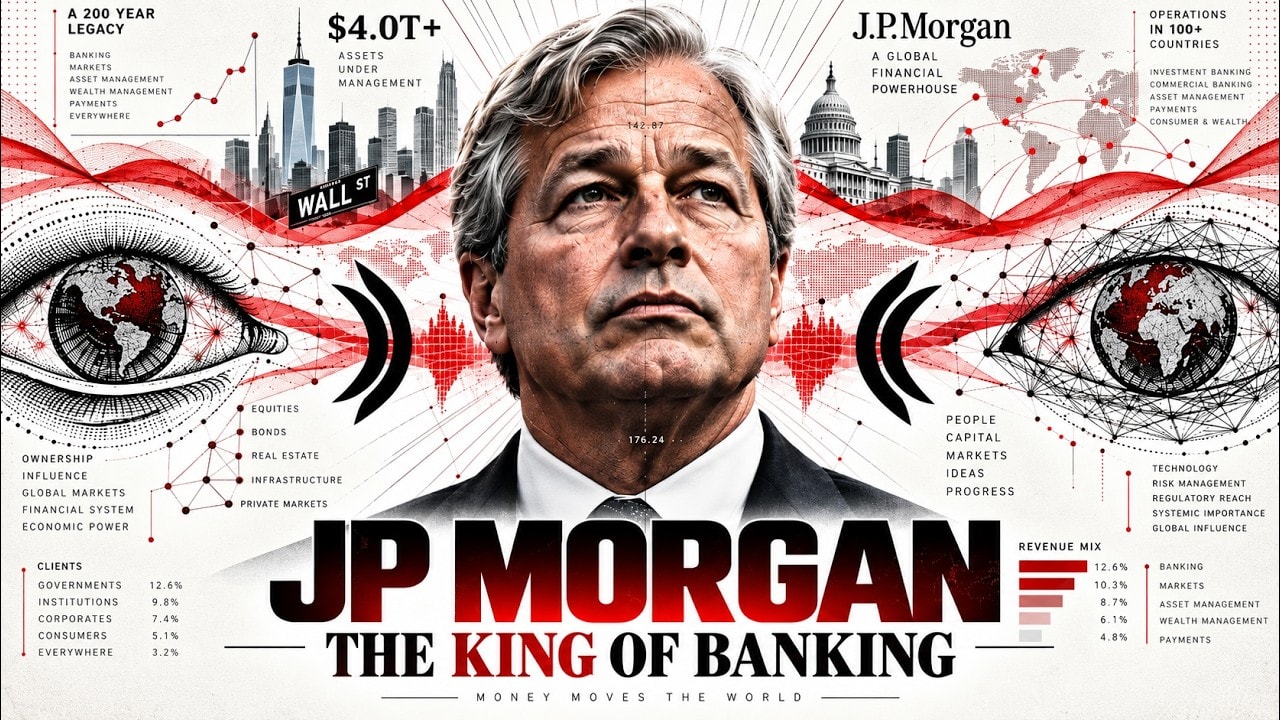
Think School: Indian Business Podcast
In 2008, while Lehman Brothers went bankrupt and Citigroup lost $27.7 billion, JP Morgan made a $5.6 billion profit - and bought a bank over a weekend. This Think School case study breaks down how Jamie Dimon turned the worst financial crisis of the century into an opportunity: why JP Morgan lent carefully while Wall Street laughed at him for playing too safe, how the Bear Stearns deal worked (a $1.2 billion price tag covered by the bank's own 47-storey Manhattan tower, with the Federal Reserve's Maiden Lane LLC absorbing $29 billion of $30 billion in risky mortgages), and how the Washington Mutual acquisition delivered over 2,000 branches, $160 billion in deposits and two of America's richest markets for $1.9 billion. By 2009, JP Morgan was the world's number one investment bank by fees. FULL COVERAGE: the captions appear to cover the entire episode. All figures and claims are the episode's own narration, not independently verified. Sponsor: Neuro (Neurogum). Note: YouTube's auto-captions garble several names (Jamie Dimon as 'Jamie Diamond', Lehman Brothers as 'Layman Brothers', Bear Stearns as 'Bear Stones', Citigroup as 'Croup'); these notes use the correct spellings while quotes stay verbatim from the captions. Nothing here is investment advice.
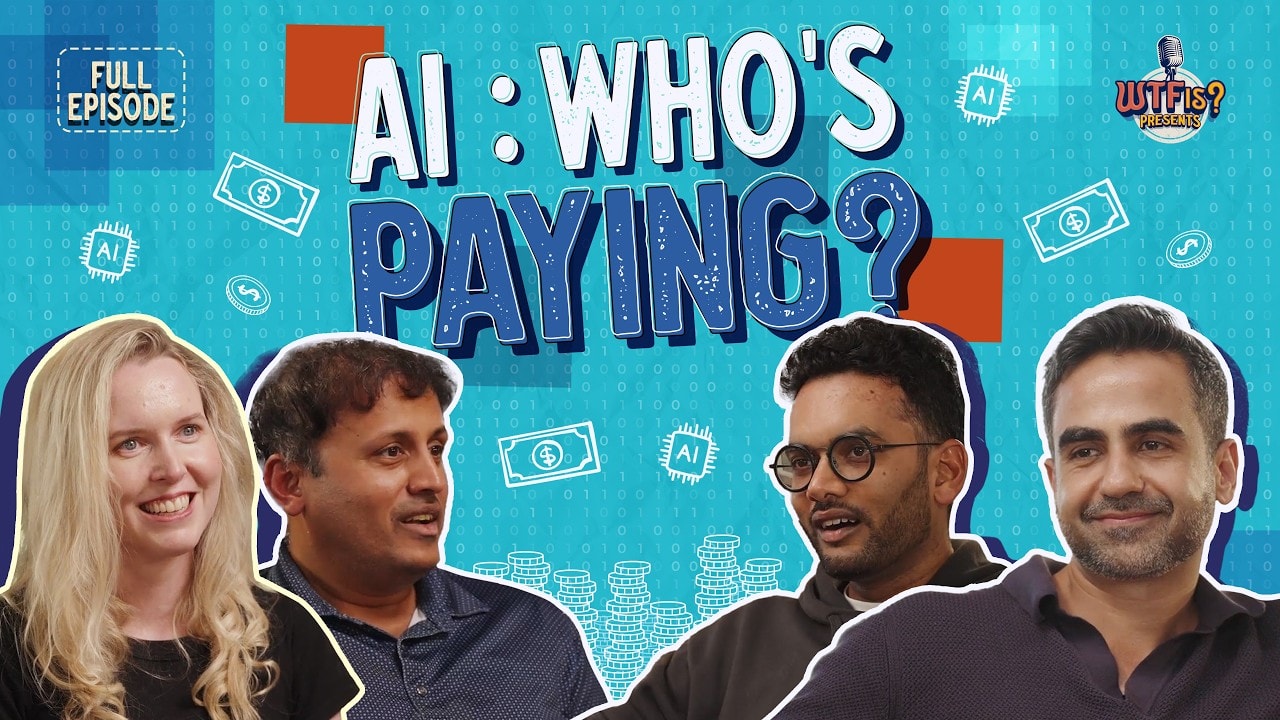
WTF is with Nikhil Kamath
Nikhil Kamath spends a week in San Francisco asking the people building AI whether it is a bubble. His panel: Akshay Kothari, co-founder of Notion; Azalia Mirhoseini and Anna Goldie, the Google Brain duo behind AlphaChip who were Anthropic employees 25 and 26 and have now co-founded frontier lab Ricursive Intelligence; and Vijay, a founder in the AI data-training space whose platform spans five million knowledge workers. The conversation maps the full AI stack - chips and data centres, frontier labs, neolabs like SSI and Ricursive, data trainers like Turing, Mercor, Surge and Scale, inference providers, applications and services - then goes layer by layer: why Ricursive is building AI that designs chips to break the hardware lottery, why training data work is obsolete every nine months, what recursive self-improvement means and why the cost of intelligence is its metric, and how Notion's agent users went from 1% to 30% in under a year. Nikhil's framing number: about $700 billion spent or committed on AI this year against about $100 billion of AI enterprise revenue. FULL COVERAGE: the captions appear to cover the entire episode. All figures and claims are the speakers' own, not independently verified. Sponsor: none stated in the episode. Nothing here is investment advice.
Think School: Indian Business Podcast
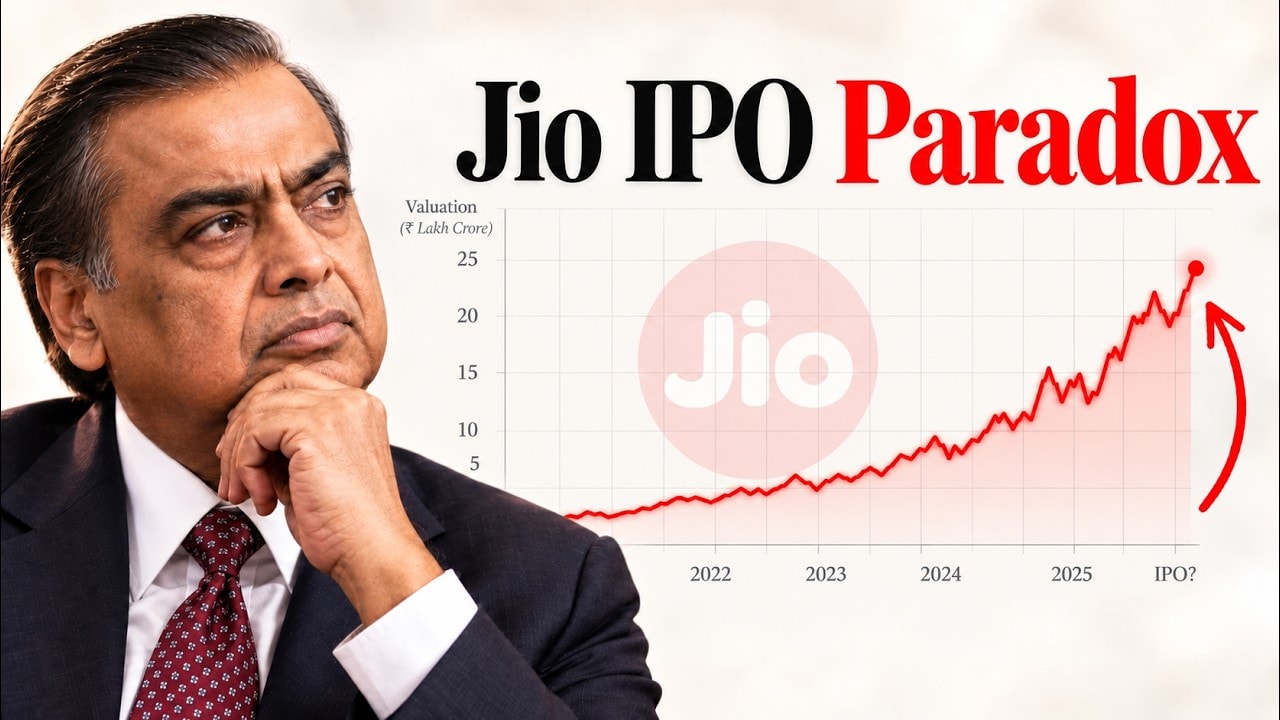
Think School reads Jio's 528-page draft IPO prospectus beyond the headlines. The video lays out Jio's headline numbers of 1.46 lakh crores in revenue, about 30,000 crores in profit and 524 million customers, then explains the business as one equation - revenue equals users times average revenue per user - across a six-level pyramid from 2G India to enterprises. It surfaces three things it says the headlines are missing: an outstanding spectrum obligation of 1.04 lakh crores that costs about 40 percent of profits a year until 2038, a deferred tax pile of 55,611 crores that kept the actual tax paid at 118 crores against a 10,300 crore paper bill, and a real free cash flow of about 20,300 crores that needs roughly 18 rupees more per user per month to hold steady. It closes with four growth engines - recharge prices, home broadband, small business digitization and AI distribution - and three risks: price-sensitive customers, the next capex cycle and satellite internet. FULL COVERAGE: the captions appear to cover the entire episode. All figures are as read from the DRHP by the channel, not independently verified, and the channel states it is not a SEBI registered adviser. Sponsor: none stated in the episode. Nothing here is investment advice.

Think School: Indian Business Podcast
A Think School interview, filmed in Sri Lanka, with former cricketer Kumar Sangakkara, now chairman of Crystal Property Group, about luxury beachfront villas in Sri Lanka and the guest's claim of an 8% net yield for investors. The host first gives three reasons he sees for a Sri Lankan turnaround, then tours a villa and asks about the model, Indian tourism and the economics. Sponsor: Odoo, linked in the description. PARTIAL COVERAGE: this note covers the host's opening, the villa tour and project story, the section on Indian visitors, the question on rental economics, and the closing, and does not cover every part of the roughly 54 minute video, including the risks and pitfalls section. All returns, tourism numbers and market claims are the host's or the guest's own and are not independently checked, and the guest is promoting his own company. This is a summary, not financial, investment or property advice.

My First Million
My First Million episode 871, in which hosts Shaan Puri and Sam Parr discuss how the diamond industry used marketing to shape what people pay for diamonds. They go through a short history of diamonds, how De Beers consolidated supply, the four Cs and the grading body that supports them, falling lab-grown prices, and a few related marketing examples. Sponsor: HubSpot, named in the episode description. PARTIAL COVERAGE: this note covers the opening, the history and De Beers section, the four Cs discussion, and the final segment, and does not cover every part of the roughly 32 minute episode. The hosts' claims about prices, history and industry practice are their own and are not independently checked. This is a summary of their views, not investment or purchasing advice.
Think School: Indian Business Podcast
A Think School case study on why India's foreign minister warned of a 4F crisis of fuel, food, fertilizer and finance, and how each could affect the Indian economy. The narrator walks through fuel imports and strategic reserves, food supply and the weak monsoon, and the cost of living effects, and ends with a call for founders working on fertilizer and solar. Sponsor: Ditto, an insurance advice platform, named in the video. PARTIAL COVERAGE: this note covers the opening, the fuel section, part of the food section and the closing, and does not cover every part of the roughly 17 minute video, including most of the fertilizer and finance sections. Figures and forecasts are the narrator's own and are not independently checked. The views on government policy are the narrator's. This is a summary, not financial, insurance or investment advice.

Figuring Out with Raj Shamani
Saurabh Mukherjea discusses knowing a core strength, developing leaders, mentoring and gaining perspective through varied work. Selected leadership passages only, not a full-episode summary or investment advice. Crisis forecasts, stocks, gold, portfolios, inflation, debt, political, AI, health and extreme-work claims omitted. Company examples are the guest's account, not current policies. Quotes reproduce Wave's third-party machine transcript; recognition errors and audio-video edit differences are possible. Untimed topics are not video chapters. Original video: https://www.youtube.com/watch?v=61_ouz8Rr4s Transcript: https://pod.wave.co/podcast/raj-shamanis-figuring-out-ae16fa52-2d44-4d97-9190-2a80ee902de7/top-investors-warning-global-crisis-coming-for-your-wealth-saurabh-mukherjea-fo573-raj-shamani
Figuring Out with Raj Shamani
Scott Galloway joins Raj Shamani to discuss the middle class, opportunity, isolation, comparison, luck and risk-taking. He challenges the idea that success is purely individual and asks how young people can build relationships and take useful risks. Economic claims and personal strategies are his views, not investment advice or clinical treatment.

Figuring Out with Raj Shamani
Sumant Sinha on renewable electricity costs, storage, grids and the solar manufacturing chain. Edited partial transcript coverage; political, geopolitical and AI-demand passages omitted. Figures, forecasts and company claims are his account, unverified here. Not investment advice. Untimed editorial topics are not video chapters.
The Diary Of A CEO with Steven Bartlett
Adam Neumann tells Steven Bartlett his account of building WeWork, losing focus as money and ego grew, and learning from the company's collapse. He discusses mission, earned influence, choosing partners for difficult days and creating space away from technology. Business figures and explanations of events are his statements. Educational summary, not investment advice.
The Tim Ferriss Show
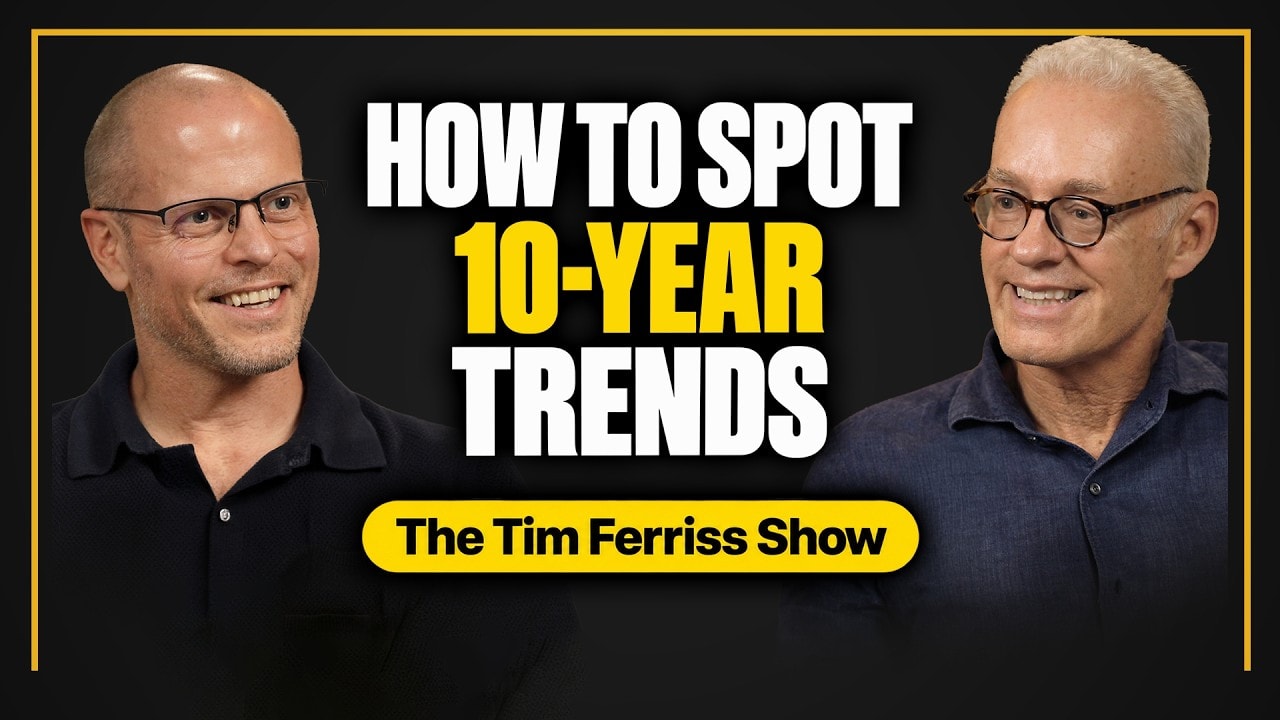
A Tim Ferriss Show conversation with Kevin Ryan, founder of AlleyCorp and an early leader of DoubleClick, about spotting 10-year trends and building companies. PARTIAL COVERAGE: the episode runs about 76 minutes and the available caption text is cut off, so this summary covers only the first part (his bio, trend spotting, events he hosts, second-order thinking, Gilt, his early career and DoubleClick, and the start of the AlleyCorp model), not the later sections such as recruiting and health. The title and some details come from YouTube metadata. All figures, forecasts and stories are the speakers' own statements, not independently checked, and nothing here is investment advice. Topics are untimed; metadata follows YouTube. Source: https://youtubetotranscript.com/transcript?v=j774AFDJqFg
Lenny's Podcast: Product | Career | Growth
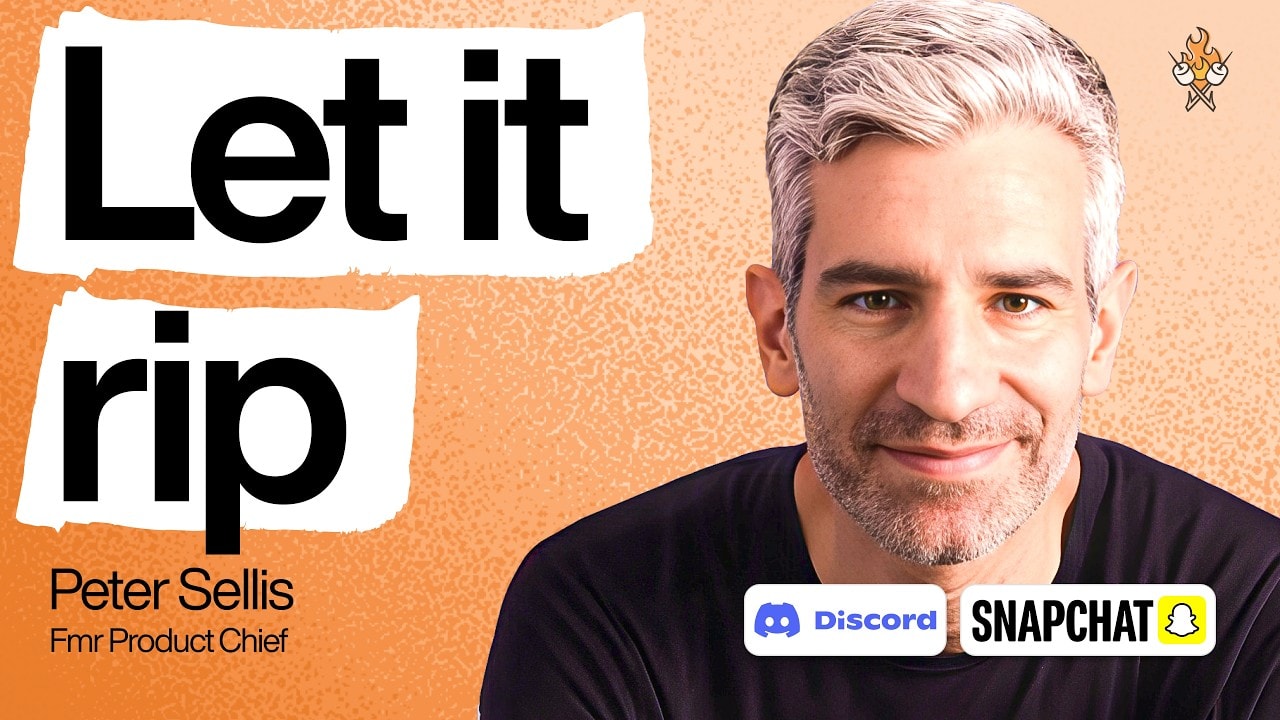
Lenny's Podcast episode in which Lenny Rachitsky speaks with Peter Sellis, the first product manager at Snapchat and later head of product at Discord, recorded while he is between roles. The episode is presented by season sponsor WorkOS. Sellis shares counterintuitive management lessons: designing teams with a clear ideology and decision rights rather than heavy collaboration, investing in top performers instead of average ones, and why he thinks the median product manager provides little value. He explains his view of why Snap struggled to build a bigger ads business despite a billion monthly users, talks about trust and ad formats, and praises SpaceX for cannibalizing its own success. PARTIAL COVERAGE: the captions cover most of the conversation, but this summary highlights the team-design lessons, the Snap ads analysis and the taste discussion only, so segments such as managing Nikita Bier and the lightning round are not summarized. These are Sellis's own opinions from his experience, not independently verified, and nothing here is career, hiring or investment advice.
Figuring Out with Raj Shamani
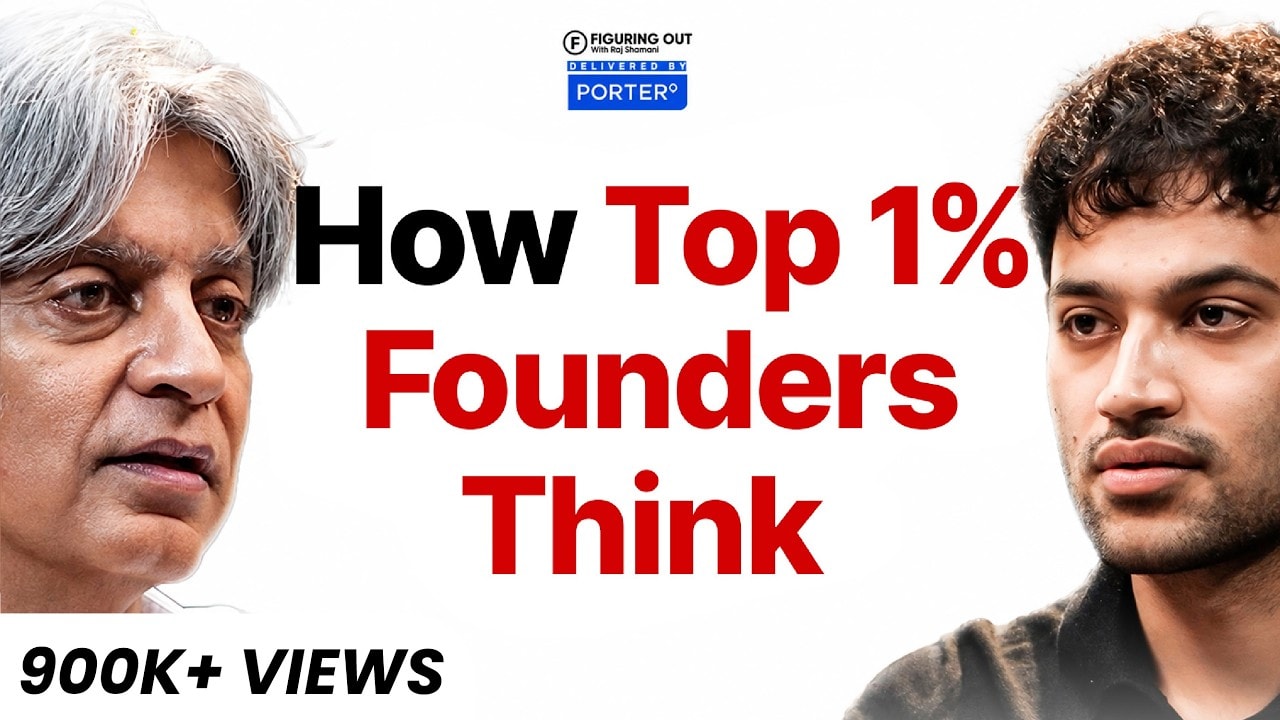
Sasha Mirchandani discusses founder follow-through, complementary skills, customer understanding, clear pitches and learning from failure. Selected founder communication and execution passages only, not a full-episode summary or investment advice. Returns, valuations, ownership, portfolio allocation and financial claims omitted. Quotes reproduce YouTube's auto-generated English transcript and may contain recognition errors. Untimed editorial topics are not video chapters. Source and transcript: https://www.youtube.com/watch?v=0XStJayUrUY
My First Million
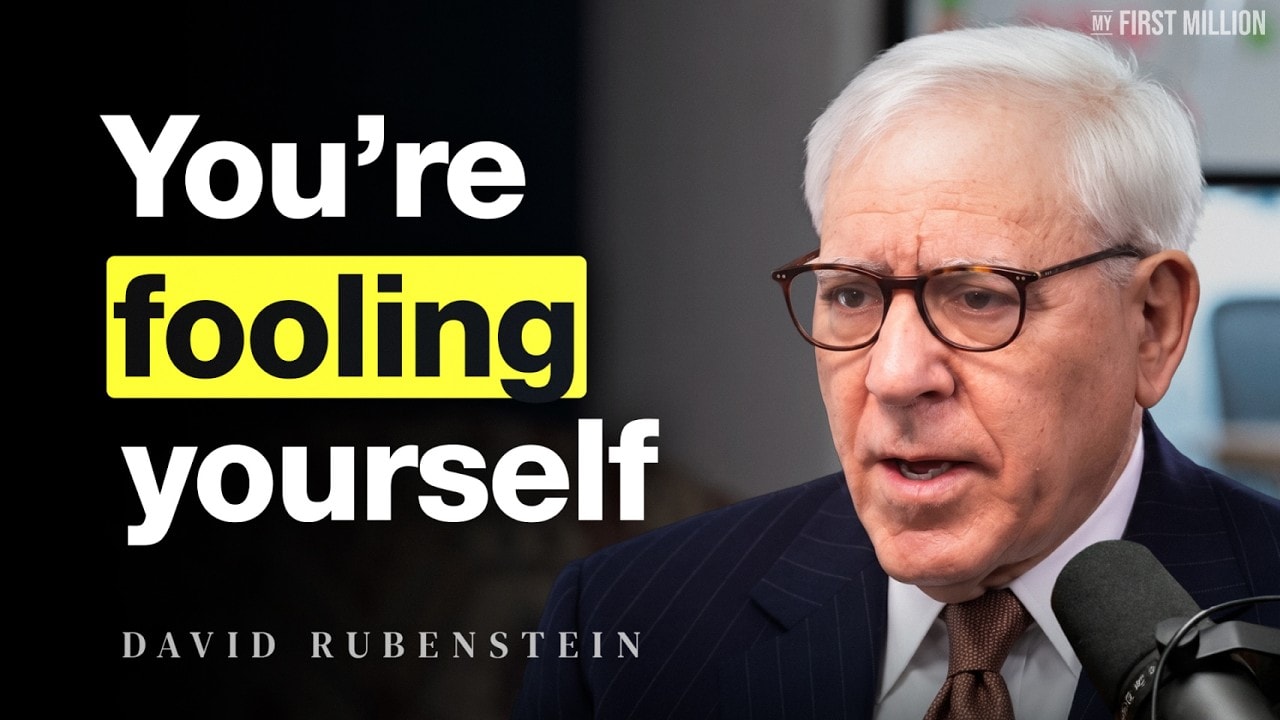
A My First Million conversation (episode 861) with Sam Parr, Shaan Puri and investor David Rubenstein, co-founder of Carlyle. He talks about the entrepreneur's fear, a missed chance to take 20% of the company Jeff Bezos was about to build, working as a young White House adviser under President Carter, losing contacts after the election, and his frugal habits. Sponsor: the description links a HubSpot resource; no HubSpot read appears in the parts covered. PARTIAL COVERAGE: this note covers the opening, the Carter White House section, the post-election lesson, the frugal habits section, and the section on starting Carlyle, and does not cover every part of the roughly 62 minute conversation, and the video title's claim about the dollar was not in the parts covered. Figures and stories are the speaker's recollections and not independently checked. This is a summary, not financial or investment advice.
Think School: Indian Business Podcast
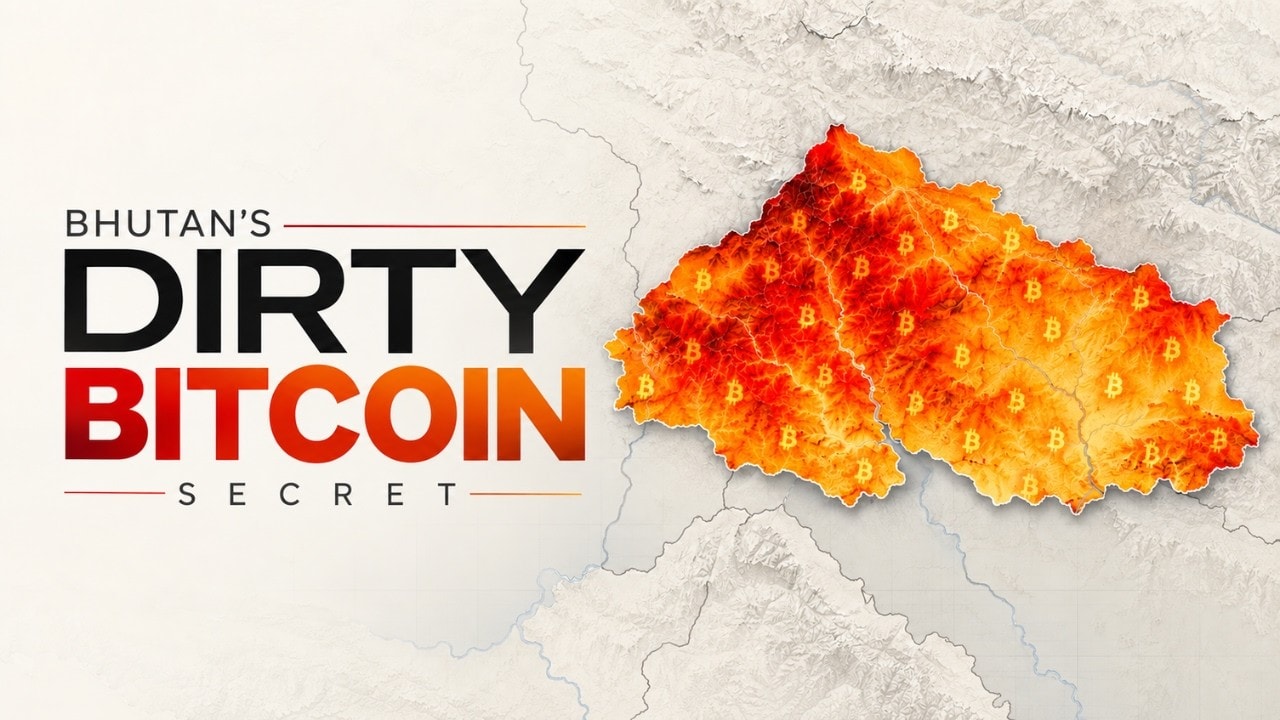
A Think School case study on how Bhutan, which the narrator says is poor by geography, ended up mining and holding Bitcoin using surplus hydropower. He explains why Bhutan could not farm, manufacture or sell services, how seasonal river flow traps it in buying back power from India, and the lessons he draws about windfall money. Sponsor: CoinDCX, a crypto exchange, named in a mid-roll read with a disclaimer that crypto is volatile. PARTIAL COVERAGE: this note covers the opening, the CoinDCX read, why Bhutan stayed poor, the hydropower and winter-shortage section, the Bitcoin decision, and the closing lessons, and does not cover every part of the roughly 17 minute video. Figures such as electricity prices and Bitcoin holdings are the narrator's own and are not independently checked. This is a summary, not financial or investment advice, and the sponsor read is an advertisement.
The Tim Ferriss Show
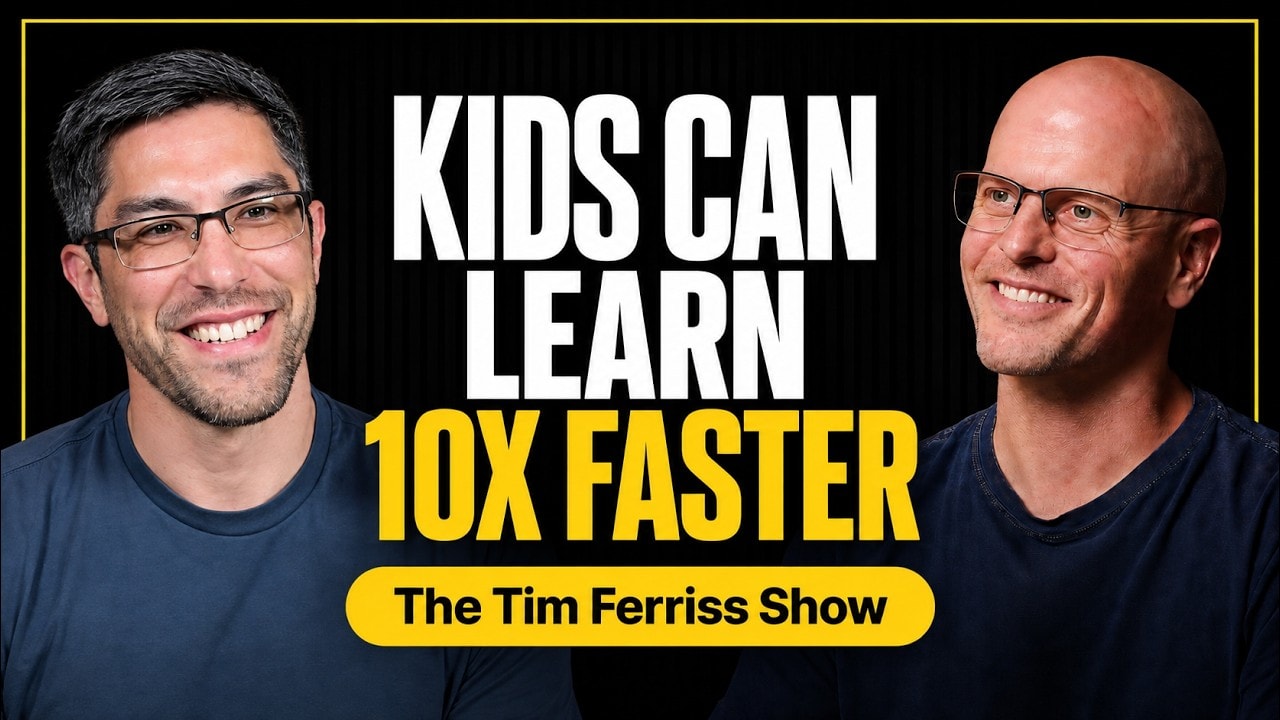
Tim Ferriss Show episode, brought to you by Fin, Shopify and Wealthfront, in which Tim coaches Niels Hoven, founder of Mentava, software designed to let young children learn to read as fast as they are capable of learning. Hoven explains that reading is a solved problem - phonics, well taught - and that Mentava's edge is optimized curriculum plus motivation design, with stories like two-year-old twins reading early-reader books and a kindergartener catching up in weeks. Most of the conversation is a working session: Ferriss advises putting investor asks at the top of updates, asks which channels actually convert (X and word of mouth, not Meta's cheap unqualified leads), critiques homepage mockups, pushes testimonials to do the heavy lifting, suggests a readiness check as a shareable artifact, and argues for congregating the already-converted instead of converting skeptics. PARTIAL COVERAGE: the captions cover most of the conversation, but this summary highlights the product logic and the marketing coaching only, so tangents and the lightning exchanges are not summarized. These are the participants' own views and claims, not independently verified, and nothing here is educational, developmental or investment advice for your child.
Think School: Indian Business Podcast
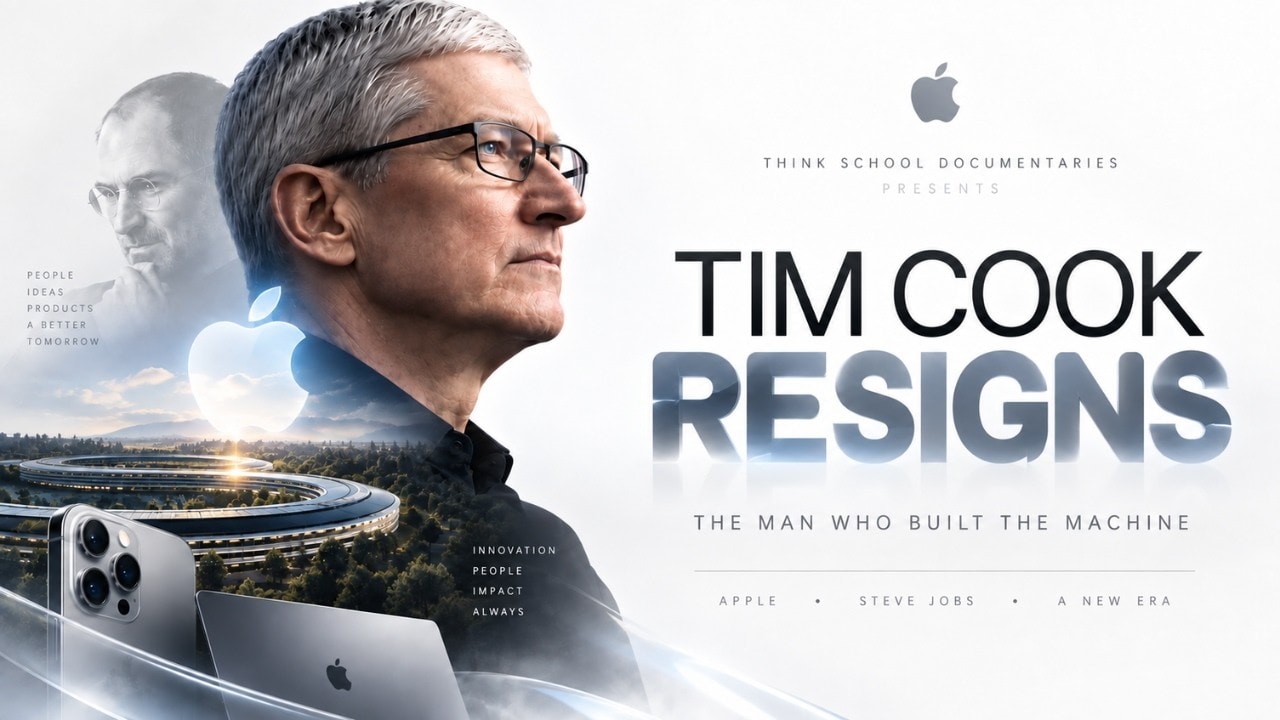
A Think School case study on how Tim Cook, a supply-chain executive seen as a boring replacement for Steve Jobs, grew Apple's market value from about $350 billion to a figure the narrator puts at $4.7 trillion. The narrator explains Apple's cash problem in the 1990s, why Cook joined, how cutting product families and parts rebuilt the supply chain, and the lesson about systems over genius. Sponsor: Vested, a platform for investing in US stocks from India, named in a mid-roll read and in the description. PARTIAL COVERAGE: this note covers the opening, the Vested read, Apple's cash problem and Cook's hiring, the product and component cuts, and the closing lesson, and does not cover every part of the roughly 21 minute video. Market value, revenue and return figures are the narrator's own and are not independently checked. This is a summary, not investment advice, and the sponsor read is an advertisement.
Invest Like the Best
Dylan Patel joins Patrick O'Shaughnessy to discuss financing compute ahead of revenue, token economics, talent, overbuilding and power constraints. His September 2025 analysis and forecasts are attributed views, not verified current deal terms, technical performance or investment advice.